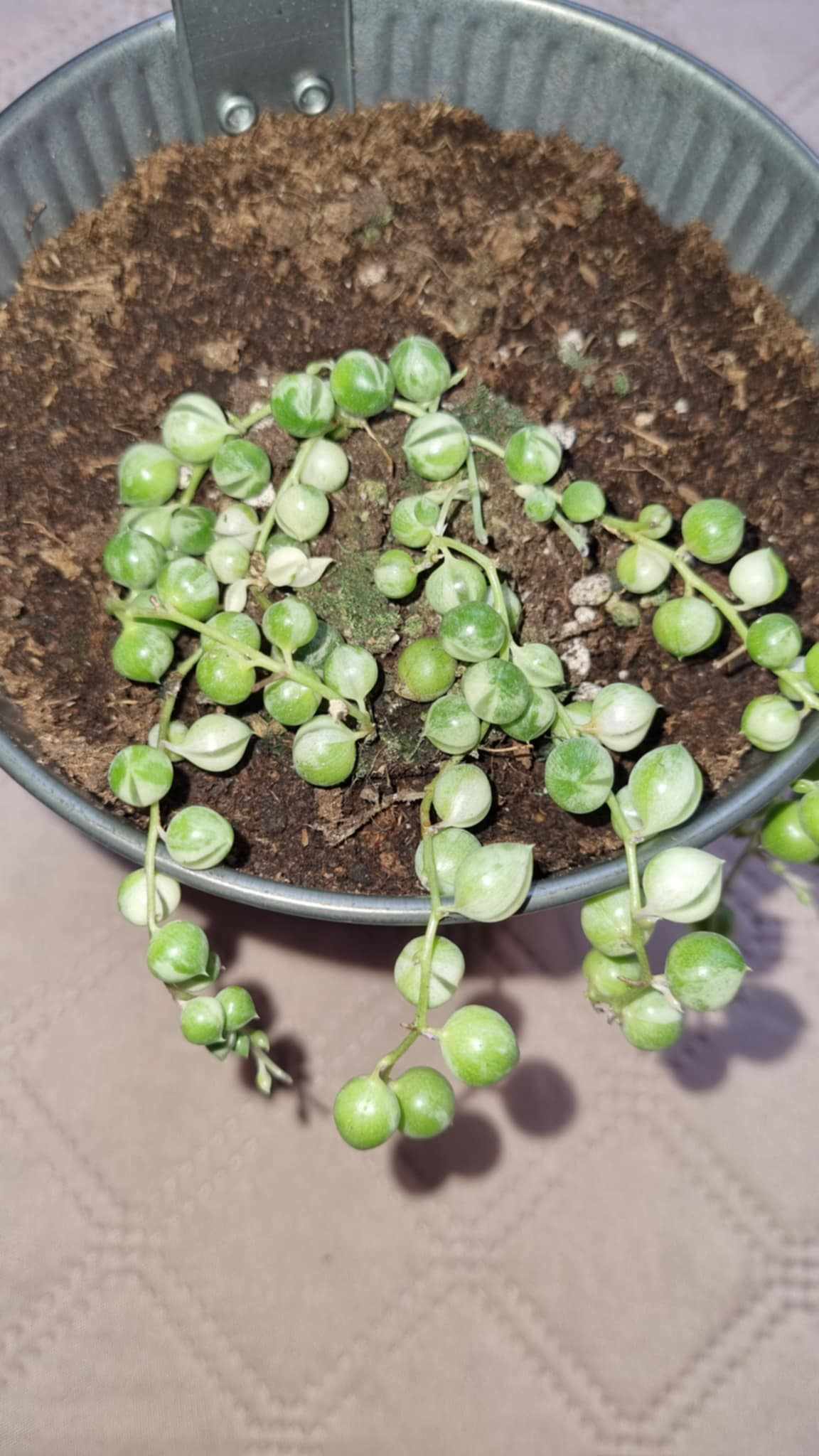
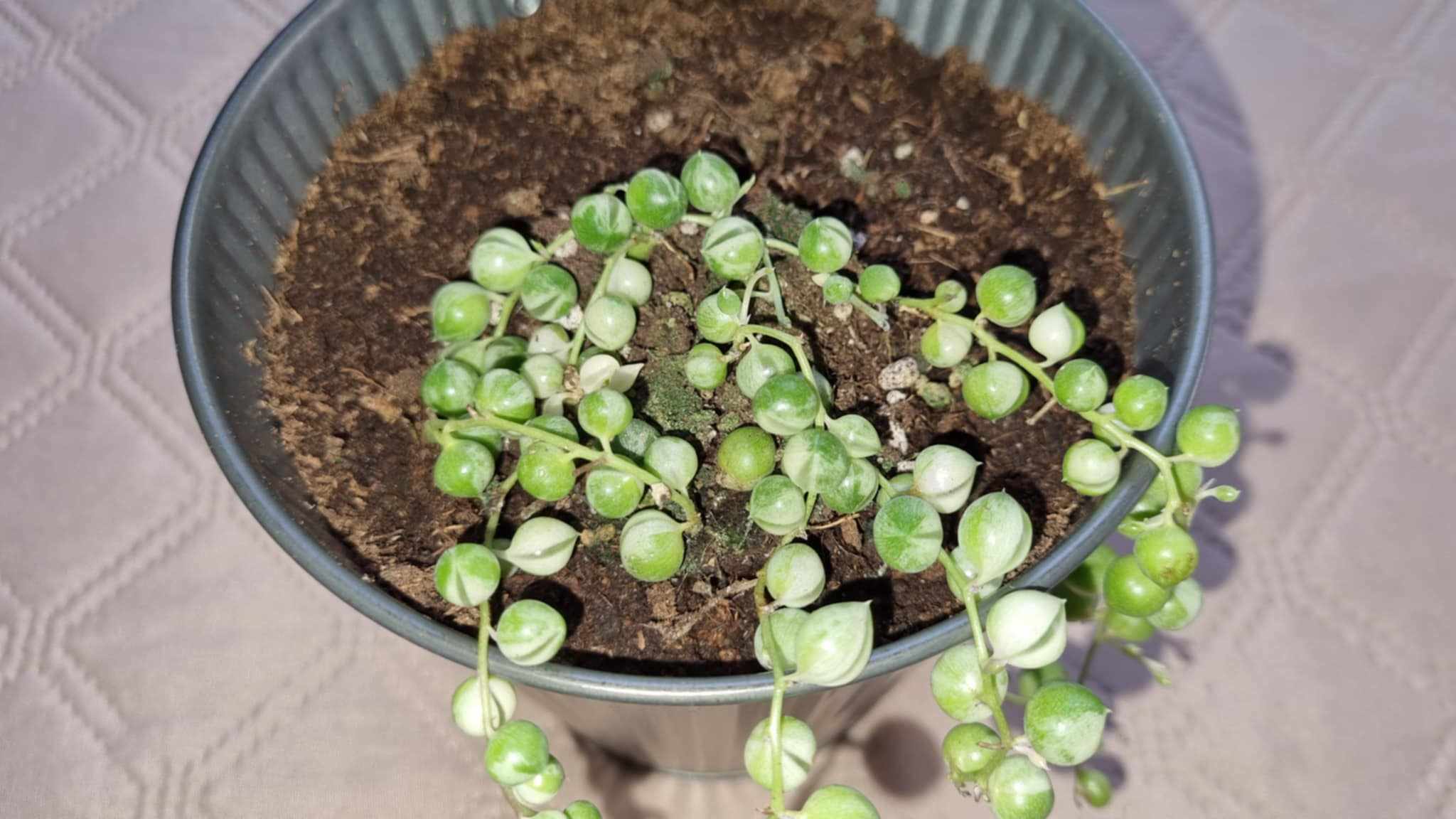
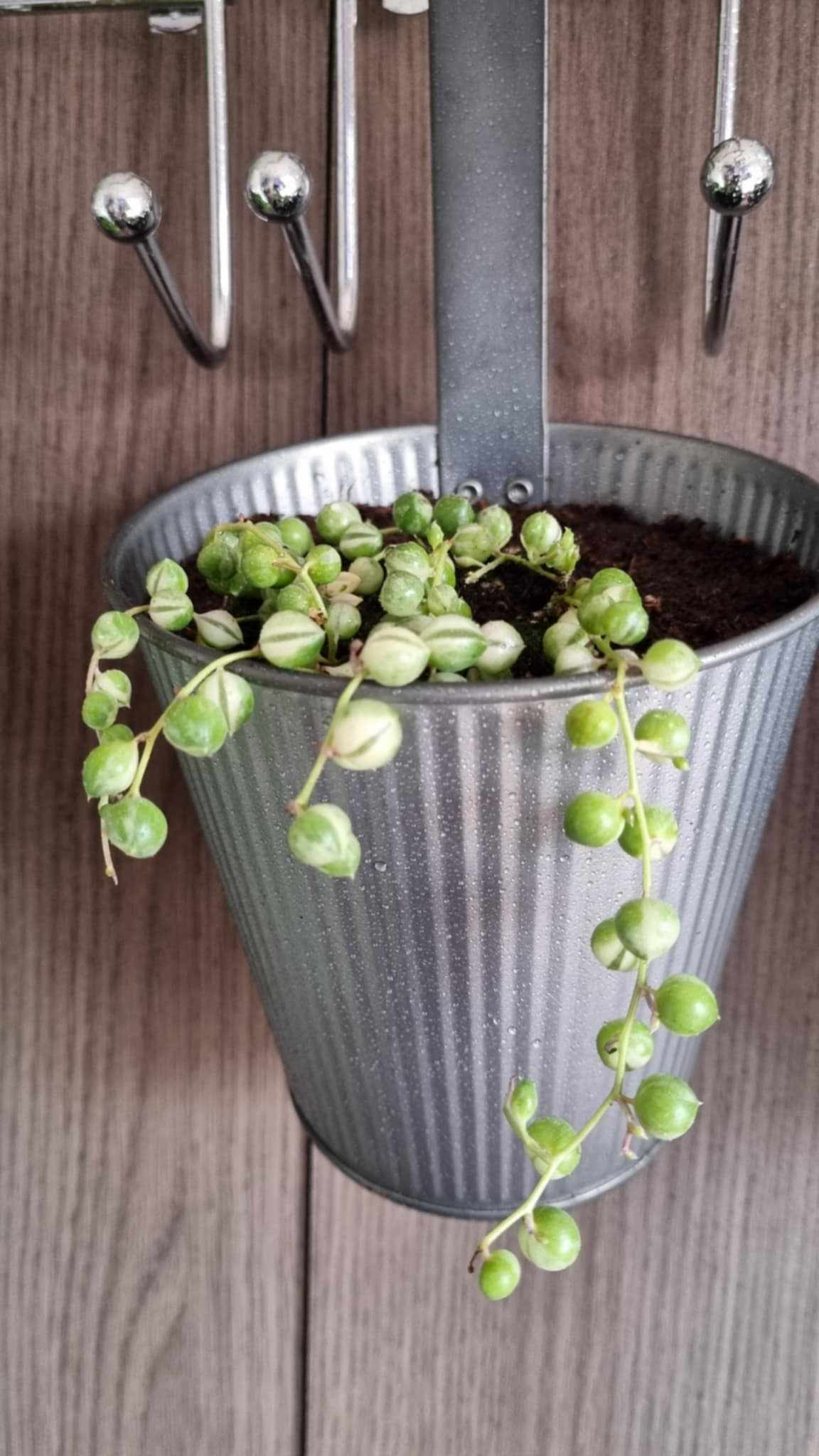
Care Guide for Senecio rowleyanus Variegata (Variegated String of Pearls)
1. Light
- Ideal Light: Variegated String of Pearls requires bright, indirect light to maintain its beautiful variegation. The white/cream portions of the plant need more light than solid green varieties.
- Light Placement: Place near an east or west-facing window, or a few feet back from a south-facing window with some protection from intense afternoon sun. The plant should receive 4-6 hours of filtered sunlight daily.
- Avoid Low Light: Insufficient light will cause the plant to lose its variegation and become leggy. However, direct hot sun can scorch the delicate pearls, so some protection during the hottest part of the day is beneficial.
2. Watering
- Watering Frequency: Allow the soil to dry out completely between waterings. This succulent stores water in its round leaves ("pearls") and is very susceptible to overwatering.
- Seasonal Adjustments: Water less frequently in winter (every 3-4 weeks) and more often in summer during active growth (every 2-3 weeks), always letting the soil dry completely between waterings.
- Watering Technique: Water at the soil level, avoiding getting water on the pearls. Consider bottom watering by placing the pot in a dish of water for 15-20 minutes, then removing it once the soil has absorbed moisture.
- Signs of Improper Watering: Shriveled pearls indicate underwatering, while soft, mushy pearls or yellowing stems suggest overwatering. The pearls should feel firm but not hard when properly hydrated.
3. Humidity
- Humidity Level: Variegated String of Pearls prefers low to average humidity (30-50%). As a succulent, it does not require high humidity and can actually suffer in overly humid conditions.
-
Humidity Considerations:
- Do not mist this plant, as moisture on the pearls can lead to rot.
- Avoid using humidity trays for this plant.
- Group with other succulents rather than humidity-loving plants.
- If using a humidifier for other plants, keep this one at a distance or in a separate room.
4. Temperature
- Ideal Temperature: Variegated String of Pearls thrives in temperatures between 70-80°F (21-27°C) during the day and around 50-55°F (10-13°C) at night.
- Minimum Temperature: Do not expose to temperatures below 40°F (4°C). This succulent is not frost-hardy and cold damage can occur quickly at lower temperatures.
- Avoid Temperature Fluctuations: Keep away from cold drafts, air conditioning vents, and heating sources. Sudden temperature changes can stress the plant and cause pearl drop.
5. Soil
- Soil Type: Use a very well-draining succulent or cactus potting mix. Adding extra perlite, pumice, or coarse sand (about 50% of the mix) will improve drainage and prevent root rot.
- Soil pH: Slightly acidic to neutral soil (pH one needs a large pot. A small 4-6 inch pot is sufficient for a young plant.
- Drainage: Excellent drainage is essential to prevent root rot. Always use a pot with drainage holes, and consider a terracotta pot that allows soil to dry more quickly.
6. Fertilization
- Fertilizer Type: Use a diluted balanced fertilizer or one specifically formulated for succulents and cacti (low in nitrogen).
- Fertilizing Frequency: Feed sparingly during the growing season (spring and summer) every 4-6 weeks. Do not fertilize in fall and winter when growth naturally slows.
- Application Method: Apply to slightly moist soil to prevent root burn. Dilute the fertilizer to half the recommended strength to avoid over-fertilization.
- After Repotting: Wait at least 4-6 weeks after repotting before fertilizing to avoid stressing the plant with chemical burn.
7. Repotting
- Frequency: Repot every 2-3 years or when the plant becomes root-bound. Variegated String of Pearls doesn't mind being slightly root-bound and doesn't require frequent repotting.
- Pot Size: Choose a shallow, wide pot rather than a deep one, as the root system is relatively shallow. Increase pot size by only 1-2 inches at a time.
- Repotting Process: Carefully remove the plant, shake off old soil gently, inspect and trim any dead or rotting roots, and replant in fresh succulent mix. Wait a week before watering after repotting to allow any root injuries to heal.
8. Pruning
- Regular Maintenance: Remove any dead, discolored, or shriveled strands at the soil level using clean, sharp scissors or pruning shears.
- Shaping: Trim overly long strands to maintain desired length and encourage fullness. Cut just above a pearl with sterilized scissors.
- Cleaning: If dust accumulates on the pearls, you can gently brush it off with a small, soft brush. Avoid washing or wiping with water.
9. Pests and Diseases
- Common Pests: Mealybugs and spider mites can occasionally affect String of Pearls. Inspect regularly, particularly where the stems meet the soil.
- Pest Prevention: Maintain good air circulation, avoid overwatering, and isolate new plants before adding them to your collection. Regular inspection is key to early detection.
- Treatment: For minor infestations, dab insects with alcohol on a cotton swab. For more serious cases, use insecticidal soap or neem oil formulated for succulenten, being careful not to oversaturate the pearls.
- Disease Prevention: The main disease concern is rot from overwatering. Prevent by allowing the soil to dry completely between waterings and ensuring excellent drainage.
10. Winter Care
- Reduced Watering: Water very sparingly during winter months, allowing the soil to dry completely and then waiting a week or more before watering again.
- Temperature: Keep temperatures above 50°F (10°C). Protect from cold windowsills during frosty nights.
- Light: Move closer to light sources as winter daylight hours decrease, but protect from cold drafts near windows.
- Winter Humidity: Maintain good air circulation and avoid placing near humidifiers or in humid rooms like bathrooms, as winter humidity combined with cooler temperatures can lead to rot.
11. Propagation
-
Stem Cuttings: The easiest way to propagate Variegated String of Pearls:
- Take 3-5 inch stem cuttings with several pearls attached.
- Allow the cut ends to callus for 24-48 hours in a warm, dry place.
- Prepare a small pot with well-draining succulent soil mix.
- Place several cuttings in the soil, burying 1-2 nodes (the small bumps where pearls attach). The pearls should remain above the soil.
- Keep the soil barely moist until roots form, usually within 3-4 weeks. Tug gently to check for resistance indicating root formation.
-
Soil Layering:
- For plants already in pots, you can encourage rooting by pinning sections of trailing stems to the soil surface.
- Use small bent wire pieces or hairpins to secure the stem against the soil at a node point.
- Once rooted, these sections can be cut from the mother plant to create new plants.
Senecio rowleyanus Variegata, commonly known as Variegated String of Pearls, is a striking succulent with distinctive bead-like leaves (the "pearls") that feature cream to white variegation patterns against green tissue. This trailing succulent is a variegated form of the classic String of Pearls and belongs to the Asteraceae family. Native to southwest Africa, the plant has adapted to arid conditions by developing round leaves that minimize surface area to reduce water loss and maximize water storage. The variegated version is somewhat rarer and more delicate than its all-green counterpart. When happy, the strings can grow up to 2-3 feet long, creating a dramatic cascading effect that makes it perfect for hanging baskets or high shelves. Small, white, brush-like flowers with a cinnamon-like scent may appear in the right conditions, though the plant is primarily grown for its unique foliage. Each pearl has a small window or transparent area that allows light to penetrate deeper into the leaf for photosynthesis. The variegation requires more light than the standard variety to maintain its coloration, and the plant generally needs more careful attention to watering and light conditions. With proper care focusing on bright indirect light, careful watering, and well-draining soil, your Variegated String of Pearls can become a truly distinctive and eye-catching addition to your succulent collection.
Comments