
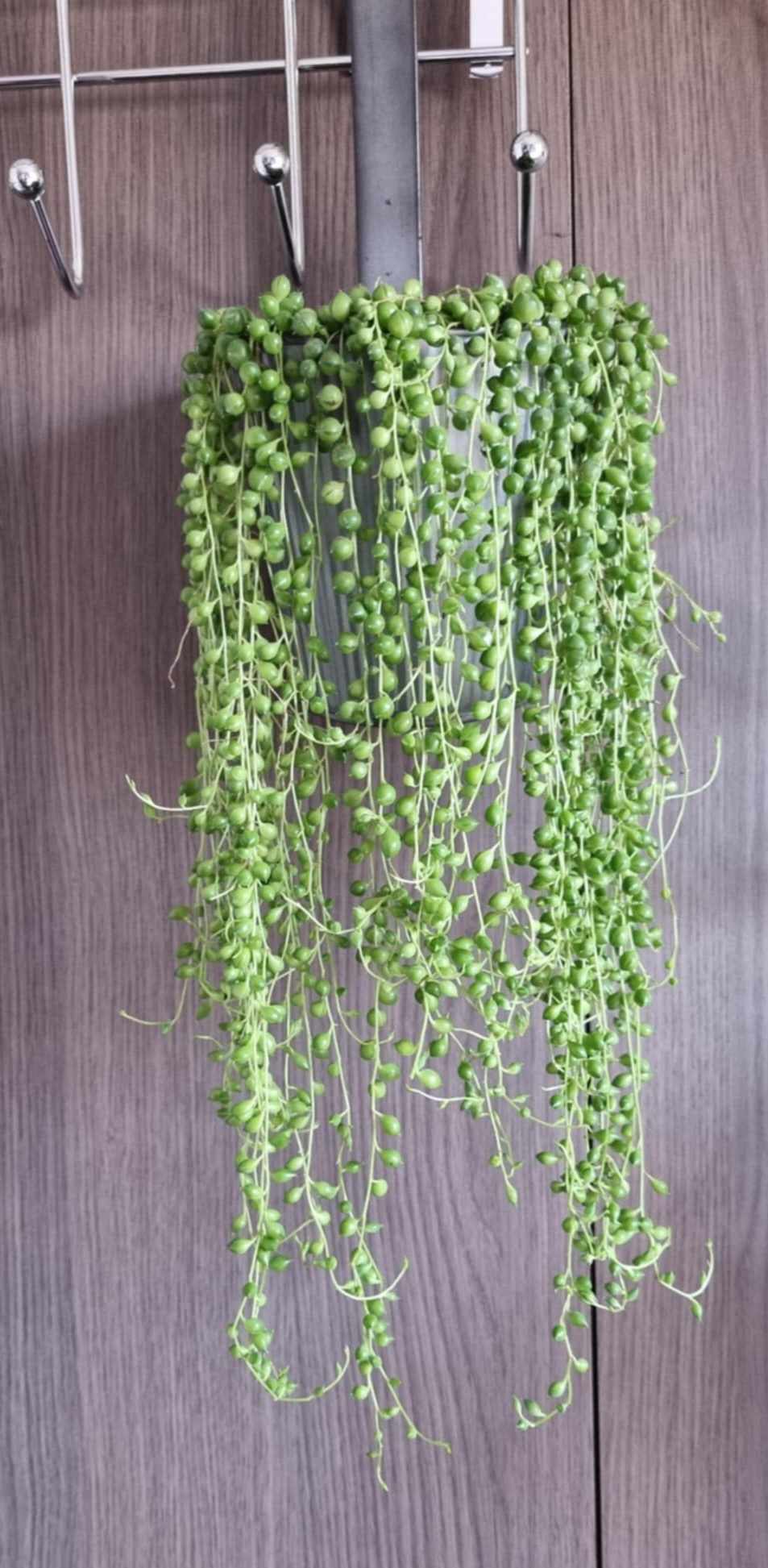
Care Guide for Senecio rowleyanus
1. Light
- Ideal Light: Senecio rowleyanus (String of Pearls) thrives in bright, indirect light. It can tolerate some direct morning sun but should be protected from harsh afternoon sunlight.
- Light Placement: Place near an east or north-facing window, or a few feet away from a south or west-facing window with filtered light. The plant can also adapt to medium light conditions but may grow more slowly.
- Avoid Insufficient Light: In low light conditions, the plant may become leggy with smaller, more widely spaced \"pearls.\" However, too much direct sunlight can scorch the delicate spherical leaves.
2. Watering
- Watering Frequency: Allow the soil to dry out completely between waterings. During the growing season (spring and summer), water approximately once every 2-3 weeks. In winter, reduce watering to once a month or less.
- Seasonal Adjustments: Significantly reduce watering during fall and winter when the plant is semi-dormant. Resume normal watering in spring when growth resumes.
- Watering Technique: Water thoroughly until it drains from the bottom of the pot, then allow all excess water to drain away. Never leave the plant sitting in water. Consider bottom watering to avoid getting water on the pearls, which can cause rot.
- Signs of Improper Watering: Overwatering is the most common cause of problems and can lead to root rot. The pearls may appear soft, shriveled, or discolored if overwatered. When underwatered, the pearls may appear wrinkled or puckered, but the plant can recover quickly once watered.
3. Humidity
- Humidity Level: Senecio rowleyanus prefers low to average humidity environments (30-50%) similar to its native desert habitat.
-
Humidity Concerns:
- Do not mist this succulent as it can lead to fungal issues and rot.
- Avoid using humidity trays or placing near humidifiers.
- Do not group with tropical plants that require high humidity.
- Ensure good air circulation, especially in humid climates or during rainy seasons.
- Ideal Temperature: Senecio rowleyanus prefers average room temperatures between 70-80°F (21-27°C) during the growing season.
- Minimum Temperature: Do not expose to temperatures below 50°F (10°C). This succulent is not frost-tolerant and can suffer damage at temperatures approaching freezing.
- Avoid Temperature Fluctuations: While the plant can tolerate some temperature variation, protect it from sudden cold drafts and extreme temperature changes.
- Soil Type: Use a specialized cactus and succulent mix with excellent drainage. You can create your own by mixing regular potting soil with coarse sand, perlite, and/or pumice (approximately 50% mineral material).
- Soil pH: Slightly acidic to neutral soil (pH 6.0-7.0) is preferred.
- Drainage: Exceptional drainage is crucial for this succulent. Always use pots with drainage holes and consider adding a layer of gravel at the bottom of the pot for additional drainage.
- Fertilizer Type: Use a specialized succulent fertilizer with low nitrogen content, or a balanced fertilizer diluted to quarter strength.
- Fertilizing Frequency: Feed sparingly during the growing season (spring and summer), approximately once every 4-6 weeks. Do not fertilize during fall and winter when the plant is semi-dormant.
- Application Method: Apply to slightly moist soil to prevent root burn. Over-fertilization can damage the plant and affect its natural growth pattern.
- After Repotting: Wait at least 4-6 weeks after repotting before fertilizing to allow the plant to adjust and any root damage to heal.
- Frequency: Repot every 2-3 years or when the plant has outgrown its container. String of Pearls doesn't mind being slightly rootbound.
- Pot Size: Choose a pot that's only slightly larger than the current one. Shallow, wide pots are ideal as the plant has a shallow root system and trails over the edges. Terracotta or clay pots are recommended as they allow soil to dry more quickly.
- Repotting Process: Gently remove the plant from its current pot, brush away old soil from the roots, check for any rot or damage, and place in the new pot with fresh succulent mix. Wait 7-10 days before watering after repotting to allow any damaged roots to heal.
- Regular Maintenance: Remove any dead, damaged, or diseased strands as needed. Pruning can be done any time of year but is best during the active growing season.
- Shaping: Trim back overly long strands to maintain the desired length and encourage fuller growth. Cut strands can be used for propagation.
- Cleaning: Dust can accumulate on the pearls. If needed, use a soft, dry paintbrush to gently remove dust without damaging the delicate surface of the pearls.
- Common Pests: Mealybugs and aphids are the most common pests. Regularly inspect the plant, especially where stems meet the soil and in between the pearls.
- Pest Prevention: Good air circulation, proper watering practices, and regular inspection can help prevent pest infestations.
- Treatment: Isolate affected plants immediately. For minor infestations, spot-treat with rubbing alcohol on a cotton swab. For severe cases, use appropriate insecticidal soap or neem oil formulated for succulents.
- Disease Prevention: The most common disease is rot from overwatering. Ensure proper drainage and avoid excess moisture on the plant.
- Reduced Watering: Significantly reduce watering during winter months, watering only enough to prevent shriveling (approximately once a month or less).
- Temperature: Maintain temperatures above 50°F (10°C). While the plant prefers a slight winter rest period with cooler temperatures, it should not be exposed to frost.
- Light: Continue to provide as much light as possible during winter months. If natural light is limited, consider supplementing with grow lights.
- Humidity: Be especially vigilant about good air circulation during winter to prevent fungal issues in cooler, less ventilated indoor environments.
-
Stem Cuttings:
- Take a cutting of a healthy strand, at least 3-4 inches long with several pearls.
- Allow the cutting to callus for 1-2 days in a dry, shaded location.
- Place the cutting on slightly moist succulent soil mix, with at least one node (where pearls attach to the stem) in contact with the soil.
- Optionally, you can apply rooting hormone to the nodes that will be in contact with the soil to encourage faster rooting.
-
Layering:
- While the strands are still attached to the mother plant, pin a section of the strand to the soil surface using bent wire or hairpins.
- Ensure that nodes along the strand are in contact with the soil.
- Keep the soil slightly moist until roots develop at these nodes.
- Once rooted (usually after 3-4 weeks), the new section can be cut from the mother plant and grown as a separate plant.
4. Temperature
5. Soil
6. Fertilization
7. Repotting
8. Pruning
9. Pests and Diseases
10. Winter Care
11. Propagation
Senecio rowleyanus, commonly known as String of Pearls or String of Beads, is a distinctive trailing succulent native to southwest Africa, particularly the drier parts of Namibia. This member of the Asteraceae family is highly prized for its unique appearance, featuring long, slender stems adorned with spherical, pea-sized leaves that resemble a string of pearls or beads. These round leaves have evolved to minimize water loss while maximizing light absorption through a small translucent \"window\" on each pearl. The plant's trailing stems can grow up to 2-3 feet long, making it perfect for hanging baskets or elevated planters where the strands can cascade gracefully. Under ideal conditions, String of Pearls may produce small, white, brush-like flowers with a sweet cinnamon-like fragrance, typically in late winter to early spring. However, flowering is relatively rare in indoor cultivation. This succulent is relatively easy to care for as long as its basic needs for bright light, minimal water, and excellent drainage are met. It makes an excellent architectural specimen for modern interiors, succulent arrangements, or as a striking focal point in a sunny location. The String of Pearls is considered toxic if ingested, so care should be taken when placing this plant, especially in households with children and pets. The sap can also cause skin irritation in sensitive individuals, so it's advisable to wear gloves when handling the plant extensively.