
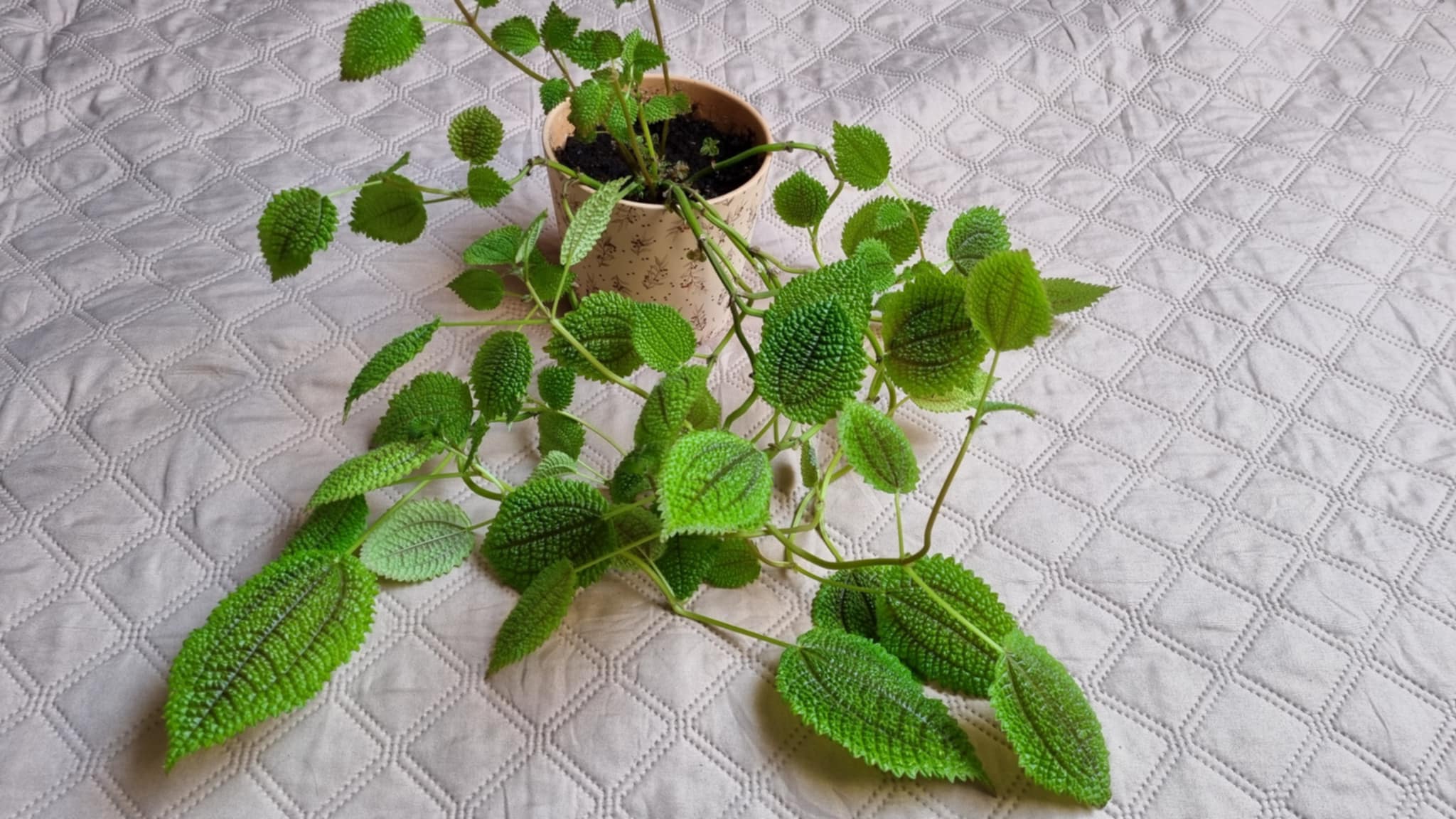
Care Guide for Pilea mollis Wedd
1. Light
- Ideal Light: Pilea mollis (Moon Valley Pilea) thrives in bright, indirect light. It can tolerate medium light conditions but may lose some of its distinctive leaf texture and coloration in lower light.
- Light Placement: Place near an east or north-facing window, or a few feet away from a south or west-facing window with filtered light. Morning sun is beneficial, but avoid harsh afternoon sun.
- Avoid Direct Sunlight: Direct sunlight, especially during hot afternoons, can scorch the leaves. However, some gentle morning sun helps maintain the plant's compact growth habit and vibrant coloration.
2. Watering
- Watering Frequency: Keep the soil consistently moist but not soggy. Allow the top inch of soil to dry out slightly between waterings. Typically, this means watering once every 5-7 days, depending on environmental conditions.
- Seasonal Adjustments: Reduce watering frequency during fall and winter when growth slows. Increase slightly during active growth in spring and summer.
- Watering Technique: Water thoroughly until it drains from the bottom of the pot, then empty the drainage tray to prevent the plant from sitting in water. Use room temperature water.
- Signs of Improper Watering: Yellowing leaves often indicate overwatering, while curling or drooping leaves suggest underwatering. This plant is more sensitive to underwatering than many other houseplants.
3. Humidity
- Humidity Level: Pilea mollis prefers moderate to high humidity (50-60%) as it is native to tropical regions.
-
How to Increase Humidity:
- Mist the foliage regularly, especially during dry winter months.
- Place the pot on a tray filled with pebbles and water (ensure the pot isn't sitting directly in water).
- Group with other humidity-loving plants to create a more humid microclimate.
- Use a humidifier nearby, especially during winter when indoor air is drier.
- Ideal Temperature: Pilea mollis prefers warm temperatures between 65-75°F (18-24°C).
- Minimum Temperature: Do not expose to temperatures below 55°F (13°C), as cold temperatures can damage the plant.
- Avoid Temperature Fluctuations: Keep away from cold drafts, air conditioning vents, and heating sources. Sudden temperature changes can stress the plant and cause leaf drop.
- Soil Type: Use a well-draining, rich potting mix. A mixture of regular potting soil with perlite and some organic matter like compost works well to provide both drainage and moisture retention.
- Soil pH: Slightly acidic to neutral soil (pH 6.0-7.0) is preferred.
- Drainage: Good drainage is essential as the plant is susceptible to root rot. Always use pots with drainage holes.
- Fertilizer Type: Use a balanced, water-soluble fertilizer diluted to half the recommended strength. A fertilizer formulated for foliage plants is ideal.
- Fertilizing Frequency: Feed monthly during the growing season (spring and summer). Reduce or stop fertilization in fall and winter when growth slows.
- Application Method: Apply to moist soil to prevent root burn. Over-fertilization can cause brown leaf tips and edges.
- After Repotting: Wait at least 4-6 weeks after repotting before fertilizing to allow the plant to adjust and any root damage to heal.
- Frequency: Repot every 1-2 years or when the plant becomes rootbound. Pilea mollis is a moderate grower.
- Pot Size: Choose a pot that's 1-2 inches larger in diameter than the current pot. Too large a pot can lead to overwatering issues.
- Repotting Process: Gently remove the plant from its current pot, loosen the root ball slightly, and place in the new pot with fresh potting mix. Water thoroughly after repotting.
- Regular Maintenance: Remove any yellow or damaged leaves at the base using clean, sharp scissors or pruning shears.
- Shaping: Prune to control size and shape as needed. Pinching back growing tips can encourage bushier growth and prevent legginess.
- Cleaning: Wipe the leaves periodically with a damp cloth to remove dust and enhance the plant's appearance. Be gentle with the textured leaves to avoid damage.
- Common Pests: Spider mites, mealybugs, and aphids. Regularly inspect the undersides of leaves and leaf joints where pests often hide.
- Pest Prevention: Regular cleaning of leaves and maintaining proper humidity can help prevent pest infestations.
- Treatment: Isolate affected plants immediately. For minor infestations, wipe leaves with a damp cloth or use insecticidal soap. For severe cases, use neem oil or appropriate insecticides.
- Disease Prevention: Avoid overwatering to prevent root rot. Ensure good air circulation around the plant.
- Verminderd Water Geven: Geef minder vaak water tijdens wintermaanden, maar laat de grond niet volledig uitdrogen.
- Temperatuur: Handhaaf temperaturen boven 15°C en bescherm tegen koude tocht.
- Licht: Verplaats indien mogelijk dichter bij een raam, aangezien winterzonlicht minder intens is. Zorg ervoor dat de plant nog steeds voldoende licht ontvangt tijdens kortere winterdagen.
- Luchtvochtigheid: Binnenverwarming kan de luchtvochtigheidsniveaus in de winter verlagen, dus verhoog de inspanningen voor het handhaven van luchtvochtigheid tijdens deze periode.
-
Division:
- When repotting, gently divide the plant at the roots, ensuring each division has several leaves and a good portion of the root system.
- Plant each division in its own pot with fresh potting mix.
- Water grondig and keep in bright, indirect light.
- Keep the soil consistently moist until new growth appears, indicating successful establishment.
-
Stengelstekken:
- Take stem cuttings with at least 2-3 leaves attached.
- Remove the bottom leaves to expose the nodes.
- Place the cutting in moist potting mix or water.
- Keep in bright, indirect light. If in water, change the water weekly. Roots should develop within 2-4 weeks.
4. Temperature
5. Soil
6. Fertilization
7. Repotting
8. Pruning
9. Pests and Diseases
10. Winter Care
11. Propagation
Pilea mollis, commonly known as Moon Valley Pilea or Panamiga, is a striking tropical plant prized for its deeply textured, quilted leaves. Native to Central and South America, this member of the Urticaceae family features distinctive foliage with deep ridges and valleys that resemble lunar landscapes, giving the plant its common name. The leaves are typically a rich green color with bronze or reddish undertones, especially along the edges and undersides, creating a beautiful contrast. The plant has a compact, bushy growth habit, typically reaching 8-12 inches in height and width, making it perfect for tabletops, shelves, and small spaces. Unlike some other Pilea species, Moon Valley Pilea doesn't readily produce offsets or \"pups,\" but it can be propagated through division or stem cuttings. The plant occasionally produces small, inconspicuous flowers, though it is primarily grown for its unique foliage. Pilea mollis is considered moderately easy to care for, though it requires consistent moisture and higher humidity than many common houseplants. It makes an excellent terrarium plant due to its love of humidity and compact size. All parts of the plant are non-toxic to pets and humans, making it a safe choice for households with children and animals. With proper care focusing on consistent moisture, bright indirect light, and adequate humidity, your Moon Valley Pilea can be a stunning, conversation-starting addition to your indoor plant collection.