
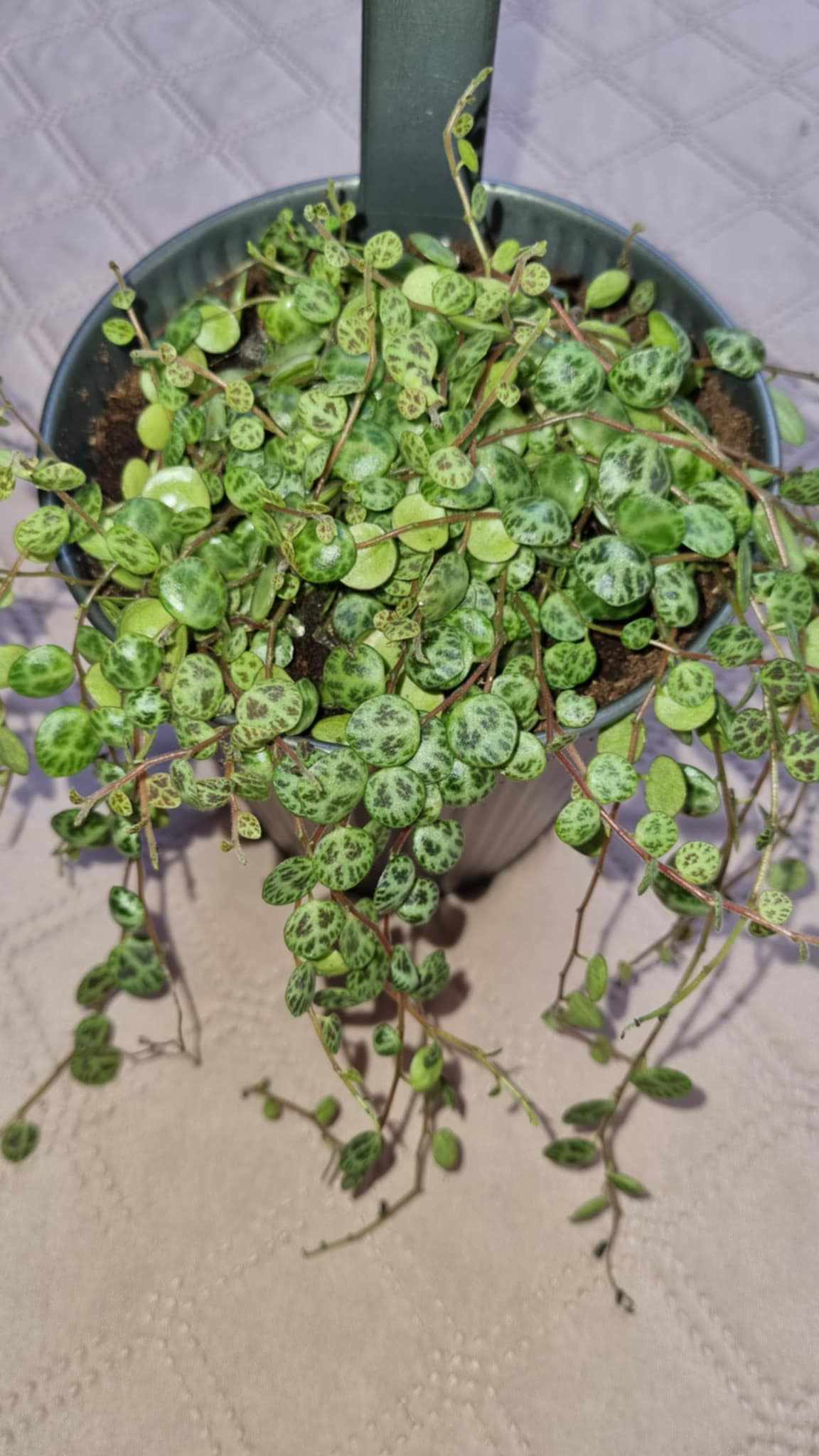
Care Guide for Peperomia prostrata
1. Light
- Ideal Light: Peperomia Prostrata thrives in bright, indirect light. While it can tolerate medium light, brighter light brings out the unique pattern on its leaves and prevents leggy growth.
- Light Placement: Place near an east or west-facing window with filtered light. It can also be grown a few feet back from a south-facing window with proper shading.
- Avoid Direct Sunlight: Direct afternoon sun can scorch the delicate leaves. However, some gentle morning sun is beneficial. In too little light, the distinctive turtle shell patterns will fade and growth will become stretched.
2. Watering
- Watering Frequency: Allow the soil to dry out almost completely between waterings. This succulent-like plant stores water in its leaves and is prone to rot if overwatered.
- Seasonal Adjustments: Water more sparingly during winter months when growth slows. During active growth in spring and summer, water only when the soil feels dry.
- Watering Technique: Water thoroughly at the soil level, allowing excess water to drain away completely. Avoid wetting the leaves when watering to prevent rot.
- Signs of Improper Watering: Shriveled, soft leaves indicate underwatering, while yellowing leaves and stem rot suggest overwatering. The leaves should feel firm and plump when properly hydrated.
3. Humidity
- Humidity Level: Peperomia Prostrata enjoys moderate to high humidity (40-60%) but is more tolerant of average home humidity than many tropical plants.
-
How to Increase Humidity:
- Occasional misting can be beneficial, but avoid excessive wetness on the leaves.
- Place the pot on a pebble tray with water, ensuring the pot doesn't sit directly in water.
- Group with other plants to create a more humid microclimate.
- A humidifier can be used during very dry periods, but is not essential for this relatively adaptable plant.
- Ideal Temperature: Peperomia Prostrata prefers temperatures between 65-75°F (18-24°C).
- Minimum Temperature: Do not expose to temperatures below 50°F (10°C). This plant is not frost tolerant and can suffer damage at low temperatures.
- Avoid Temperature Fluctuations: Keep away from cold drafts, air conditioning vents, and heating sources. Sudden temperature changes can stress the plant.
- Soil Type: Use a well-draining potting mix. A mixture of regular potting soil with added perlite, pumice or coarse sand works well. Cactus or succulent mixes can also be suitable with some added organic matter.
- Soil pH: Slightly acidic to neutral soil (pH 6.0-7.0) is preferred.
- Drainage: Excellent drainage is crucial as the plant is susceptible to root rot. Use pots with drainage holes and consider adding a layer of gravel or broken pottery at the bottom for improved drainage.
- Fertilizer Type: Use a balanced, water-soluble fertilizer diluted to half strength or a fertilizer formulated for succulents and cacti.
- Fertilizing Frequency: Feed lightly every 4-6 weeks during the growing season (spring and summer). Do not fertilize in fall and winter.
- Application Method: Apply to slightly moist soil to prevent root burn. Over-fertilization can cause leaf burn and nutrient buildup.
- After Repotting: Wait at least 4 weeks after repotting before fertilizing to avoid stressing the plant.
- Frequency: Repot every 2-3 years or when the plant becomes root-bound. This slow-growing plant doesn't need frequent repotting.
- Pot Size: Choose a pot only slightly larger than the current one. This plant does well in small, shallow pots as its root system is not extensive.
- Repotting Process: Gently remove the plant, inspect roots, trim any rotted sections, and replant in fresh soil. Handle the delicate stems with care as they break easily.
- Regular Maintenance: Remove any dead, yellowed, or damaged leaves at the base. Prune leggy growth to encourage a more compact shape.
- Shaping: Can be lightly trimmed to maintain desired shape and fullness. Pruned stems can be used for propagation.
- Cleaning: Gently dust leaves with a soft brush if needed. The textured leaf surface can collect dust, reducing photosynthesis efficiency.
- Common Pests: Mealybugs and spider mites can occasionally affect String of Turtles. Inspect regularly, particularly under leaves and along stems.
- Pest Prevention: Regular inspection, proper watering, and good air circulation help prevent pest issues. Quarantine new plants before introducing them to your collection.
- Treatment: Treat infestations with insecticidal soap, neem oil, or by dabbing insects with alcohol on a cotton swab for small infestations.
- Disease Prevention: Prevent fungal and bacterial issues by avoiding wet leaves, ensuring good air circulation, and not overwatering. The main disease concern is root rot from excess moisture.
- Reduced Watering: Water minimally during winter months, allowing the soil to dry thoroughly between waterings. Growth slows significantly during this period.
- Temperature: Maintain temperatures above 55°F (13°C). Protect from cold drafts near windows and doors.
- Light: Move closer to light sources as winter daylight hours decrease. May benefit from grow lights in particularly dark winter conditions.
- Winter Humidity: Be cautious with humidity levels during winter. While some humidity is good, excess moisture with poor air circulation can lead to fungal issues in colder months.
-
Stem Cuttings: The easiest way to propagate Peperomia Prostrata:
- Take 2-4 inch stem cuttings with several leaves attached.
- Allow the cut ends to callus for 24 hours in a warm, dry place.
- Plant in a well-draining propagation mix or lay on top of soil with nodes touching the surface.
- Keep the soil lightly moist and place in bright, indirect light.
- Roots should develop within 3-4 weeks. Gently tug to check for resistance indicating root formation.
-
Leaf Propagation:
- While less reliable than stem cuttings, Peperomia can sometimes be propagated from leaf cuttings.
- Select a healthy leaf with a small portion of stem attached, plant in moist soil and cover with a clear plastic dome to retain humidity.
- Be patient as leaf propagation takes longer than stem cuttings and has a lower success rate.
4. Temperature
5. Soil
6. Fertilization
7. Repotting
8. Pruning
9. Pests and Diseases
10. Winter Care
11. Propagation
Peperomia Prostrata, commonly known as String of Turtles, is a charming trailing succulent-like plant prized for its tiny, round leaves that feature an intricate pattern resembling turtle shells. Native to Brazil, this member of the Piperaceae family is a slow-growing epiphyte that makes an excellent choice for small spaces, terrariums, hanging baskets, or as a tabletop accent. The delicate vines grow to about 12 inches long, creating a cascading effect as they mature. Each leaf is typically less than half an inch in diameter with a distinctive dark green pattern on a lighter green background, sometimes with reddish undertones. Despite its delicate appearance, String of Turtles is relatively easy to care for once its basic needs are understood. It has succulent-like water storage capabilities in its leaves, making it somewhat drought-tolerant. While not a true succulent, it shares many care requirements with succulent plants. The plant rarely flowers indoors, but may occasionally produce tiny, inconspicuous spikes. With proper care focusing on well-draining soil, careful watering, and appropriate light, your String of Turtles can become a distinctive and eye-catching addition to your plant collection.