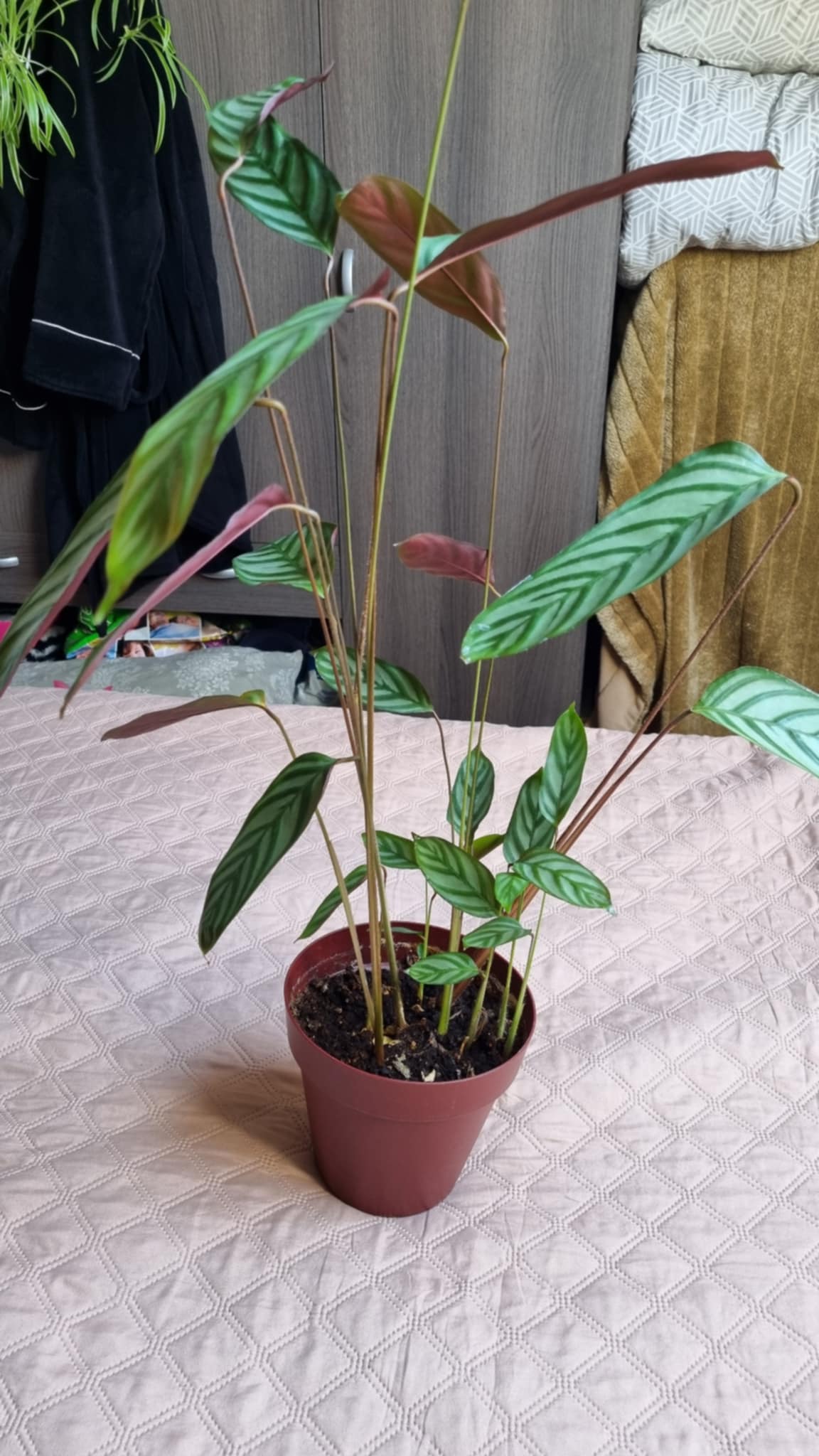

Care Guide for Ctenanthe setosa
1. Light
- Ideal Light: Ctenanthe setosa (Prayer Plant) thrives in medium to bright indirect light. Direct sunlight will scorch the decorative foliage.
- Light Placement: Place near east or north-facing windows for optimal growth. It can also adapt to lower light conditions, but growth may slow and variegation may be less pronounced.
- Avoid Direct Sunlight: Direct, intense sunlight can burn the leaves and fade the beautiful patterns. If placed near a south or west-facing window, ensure it's protected by a sheer curtain.
2. Watering
- Watering Frequency: Keep the soil consistently moist but not soggy. Water when the top inch of soil begins to dry out.
- Seasonal Adjustments: Water more frequently during active growth in spring and summer, and reduce watering in fall and winter when growth slows.
- Watering Technique: Water thoroughly until it drains from the bottom of the pot, then empty the drainage tray to prevent the plant from sitting in water. Use room temperature water to avoid shocking the roots.
- Signs of Improper Watering: Curling or drooping leaves often indicate underwatering, while yellowing leaves and a soggy base suggest overwatering. Brown leaf edges may indicate low humidity or mineral buildup from tap water.
3. Humidity
- Humidity Level: Ctenanthe setosa requires high humidity (60-80%) as it is native to tropical rainforests. This is one of the most important aspects of care for this plant.
-
How to Increase Humidity:
- Mist the foliage regularly with filtered or distilled water.
- Place the pot on a tray filled with pebbles and water (ensure the pot isn't sitting directly in water).
- Group with other tropical plants to create a more humid microclimate.
- Use a humidifier nearby for consistent humidity, especially during winter when indoor air is drier.
- Ideal Temperature: Ctenanthe setosa prefers warm temperatures between 65-80°F (18-27°C).
- Minimum Temperature: Do not allow temperatures to drop below 60°F (15°C), as cold temperatures can damage the plant. It is not frost-tolerant.
- Avoid Temperature Fluctuations: Keep away from cold drafts, air conditioning vents, and heating sources. Sudden temperature changes can stress the plant and cause leaf drop.
- Soil Type: Use a well-draining, rich potting mix with good moisture retention. A mixture of regular potting soil with peat moss, perlite, and orchid bark works well.
- Soil pH: Slightly acidic to neutral soil (pH 6.0-7.0) is preferred.
- Drainage: Good drainage is essential as the plant is susceptible to root rot. Use a pot with drainage holes to prevent water from collecting at the bottom.
- Fertilizer Type: Use a balanced, water-soluble fertilizer diluted to half the recommended strength. Alternatively, use a slow-release fertilizer formulated for tropical plants.
- Fertilizing Frequency: Feed monthly during the growing season (spring and summer). Reduce or stop fertilization in fall and winter when growth slows.
- Application Method: Apply to moist soil to prevent root burn. Over-fertilization can cause brown leaf tips and edges.
- After Repotting: Do not fertilize for at least one month after repotting. With fresh soil, your plant will not need immediate fertilization.
- Frequency: Repot every 1-2 years or when the plant becomes rootbound, typically in spring.
- Pot Size: Choose a pot that's 1-2 inches larger in diameter than the current pot. Ctenanthe plants prefer to be slightly rootbound rather than in oversized pots.
- Repotting Process: Gently remove the plant from its current pot, loosen the root ball slightly, and place in the new pot with fresh potting mix. Water thoroughly after repotting and keep in a humid environment.
- Regular Maintenance: Remove yellow or damaged leaves at the base using clean, sharp scissors or pruning shears. This promotes healthy growth and prevents disease spread.
- Shaping: Ctenanthe setosa doesn't typically require shaping, but you can trim leggy growth to maintain a more compact form.
- Cleaning: Dust the leaves periodically using a soft, damp cloth to remove dust and enhance the plant's appearance. This also helps with photosynthesis and pest prevention.
- Common Pests: Spider mites, mealybugs, scale insects, and thrips. Regularly inspect the undersides of leaves and leaf joints for signs of infestation.
- Pest Prevention: Regular cleaning of leaves, maintaining proper humidity, and good air circulation can help prevent pest infestations.
- Treatment: If pests are found, isolate the plant and treat with insecticidal soap or neem oil. For severe infestations, use a systemic insecticide specifically labeled for indoor plants.
- Disease Prevention: Avoid overwatering to prevent root rot. Ensure good air circulation around the plant and avoid wetting the leaves when watering to prevent fungal issues.
- Reduced Watering: Water less frequently during winter months, allowing the top inch of soil to dry out between waterings.
- Temperature: Maintain temperatures above 60°F (15°C) and protect from cold drafts and sudden temperature changes.
- Light: Ensure the plant still receives adequate indirect light during shorter winter days. You may need to move it closer to a window or provide supplemental grow lighting.
- Humidity: Indoor heating can significantly reduce humidity levels in winter, so it's especially important to maintain high humidity using a humidifier or pebble tray.
-
Division:
- The most effective method for propagating Ctenanthe setosa is through division during repotting.
- Gently separate the plant into sections, ensuring each section has several leaves and healthy roots.
- Plant each division in its own pot with fresh potting mix.
- Keep the soil consistently moist and maintain high humidity until new growth appears.
-
Stem Cuttings:
- Ctenanthe rarely produces viable seeds in cultivation, and stem cuttings are difficult to root.
- If attempting stem cuttings, select a healthy stem with at least two leaves and place in a high-humidity environment.
- Success rates are generally low, so division is the recommended propagation method.
- Commercial propagation is typically done through tissue culture in laboratory settings.
4. Temperature
5. Soil
6. Fertilization
7. Repotting
8. Pruning
9. Pests and Diseases
10. Winter Care
11. Propagation
Ctenanthe setosa, commonly known as Prayer Plant or Never Never Plant, is a striking tropical perennial native to the rainforests of Brazil. It belongs to the Marantaceae family, which includes close relatives like Calathea and Maranta. The plant is prized for its ornamental foliage featuring elongated oval leaves with distinctive patterns of dark green and silver-gray markings on the upper surface, while the undersides display a rich purple hue. Like other prayer plants, Ctenanthe setosa exhibits nyctinasty—a daily movement where leaves fold upward at night, resembling hands in prayer, and unfold again in the morning. This movement is controlled by a small joint between the leaf and stem called a pulvinus. Ctenanthe setosa typically grows to about 2-3 feet tall and wide, forming a bushy clump over time. It's primarily grown as a houseplant in most regions, as it requires the warm, humid conditions found in tropical environments. While it can occasionally produce small, inconspicuous white flowers, it's almost exclusively cultivated for its dramatic foliage. The plant is non-toxic to pets and humans, making it a safe choice for households with children and animals. With proper care focusing on humidity, indirect light, and consistent moisture, Ctenanthe setosa makes an eye-catching addition to any indoor plant collection.