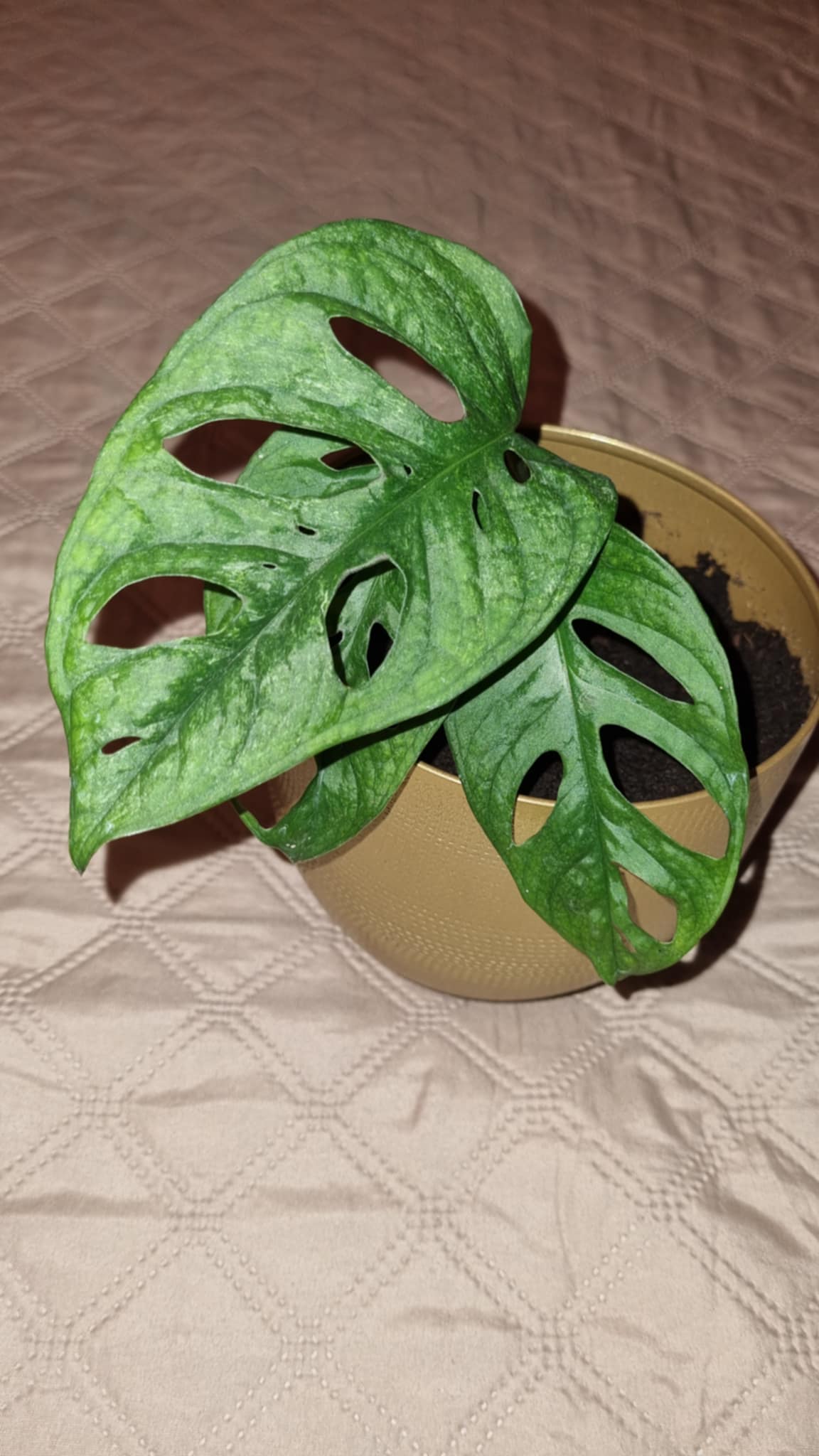
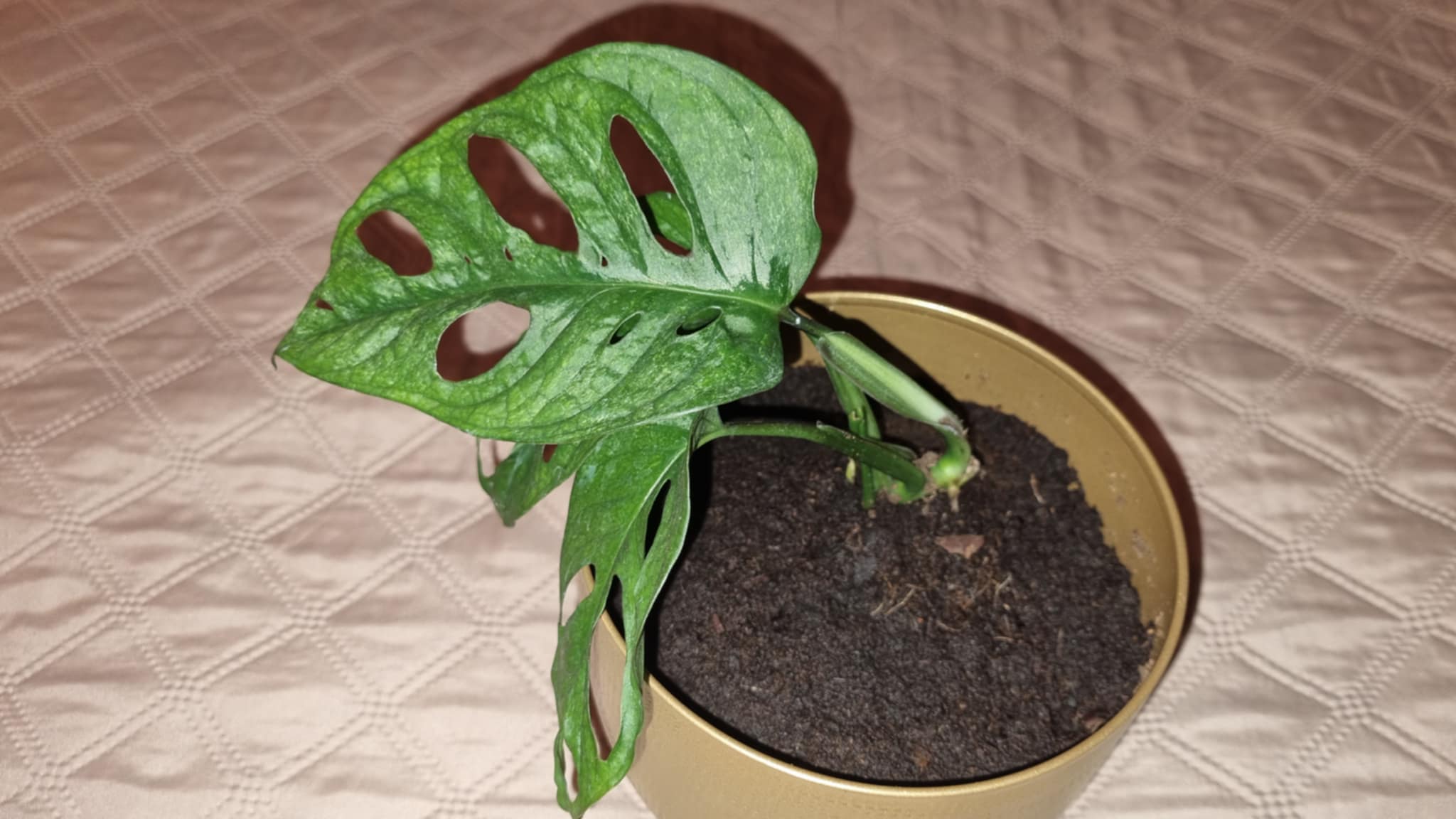
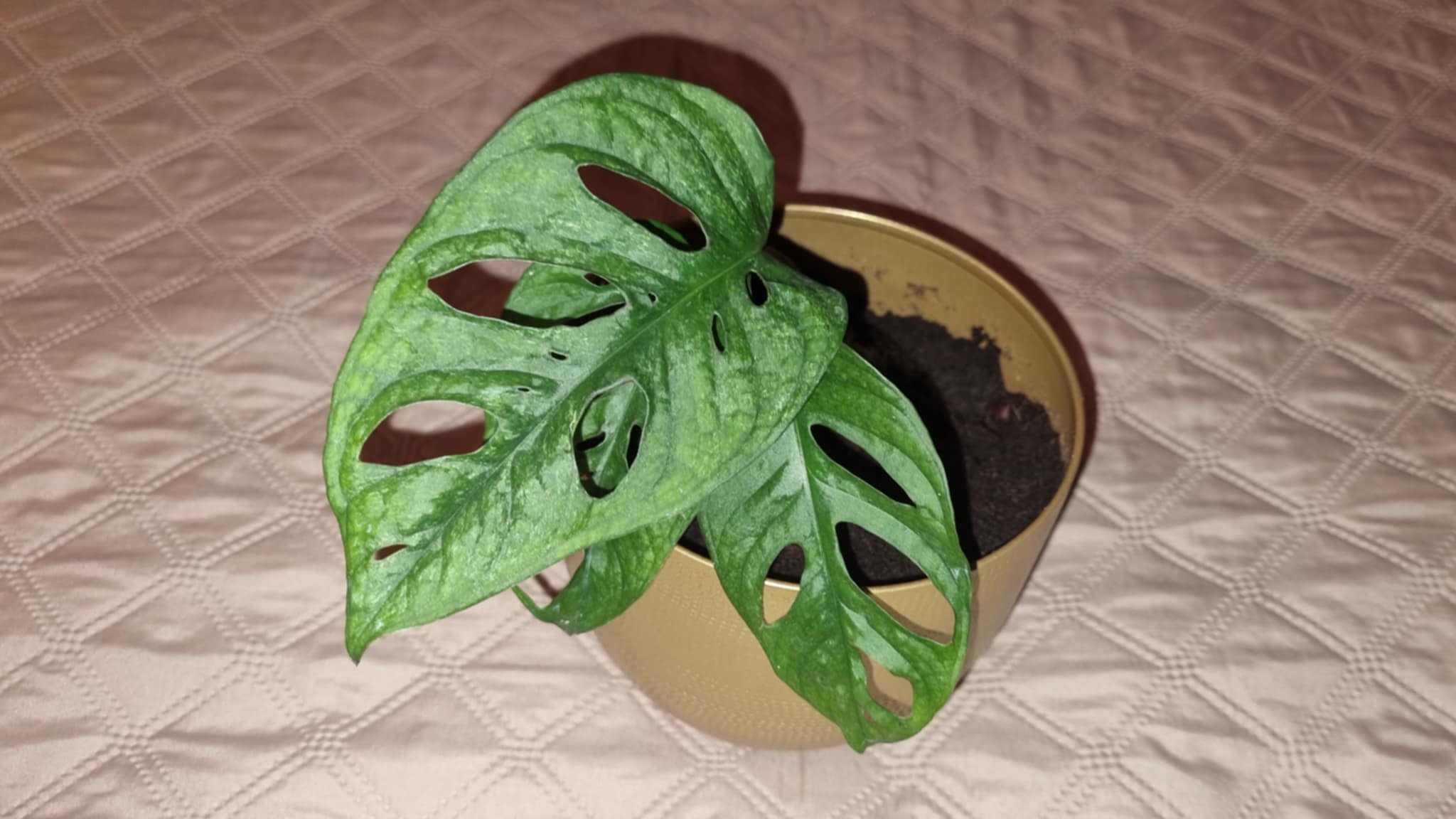
Care Guide for Monstera Adansonii Mint
1. Light
- Ideal Light: Monstera Adansonii Mint thrives in bright, indirect light. It needs good light to maintain its variegation and distinctive mint coloration.
- Light Placement: Place near an east or north-facing window, or a few feet away from a south or west-facing window with filtered light. Morning sun is beneficial, but protect from harsh afternoon sun.
- Avoid Direct Sunlight: Direct sunlight, especially during hot afternoons, can scorch the leaves. However, too little light will cause the plant to lose its variegation and the leaves may become smaller.
2. Watering
- Watering Frequency: Allow the top 1-2 inches of soil to dry out between waterings. Typically, this means watering once every 7-10 days, depending on environmental conditions and pot size.
- Seasonal Adjustments: Reduce watering frequency during fall and winter when growth slows. Increase slightly during active growth in spring and summer when the plant is actively pushing out new leaves.
- Watering Technique: Water thoroughly until it drains from the bottom of the pot, then empty the drainage tray to prevent the plant from sitting in water. Use room temperature water to avoid shocking the root system.
- Signs of Improper Watering: Yellowing leaves often indicate overwatering, while curling or crispy brown edges suggest underwatering. Monstera Adansonii Mint is more sensitive to overwatering, which can lead to root rot.
3. Humidity
- Humidity Level: Monstera Adansonii Mint thrives in high humidity (60-80%). As a tropical plant native to rainforests, it requires more humidity than many other houseplants.
-
How to Increase Humidity:
- Mist the foliage regularly with room temperature water, focusing on the aerial roots which absorb moisture from the air.
- Place the pot on a tray filled with pebbles and water (ensure the pot isn't sitting directly in water).
- Group with other tropical plants to create a more humid microclimate.
- Use a humidifier nearby - this is the most effective method for maintaining consistent humidity levels, especially during winter months.
4. Temperature
- Ideal Temperature: Monstera Adansonii Mint grows best in temperatures between 65-85°F (18-29°C). It thrives in warm environments similar to its tropical origin.
- Minimum Temperature: Do not expose to temperatures below 60°F (15°C). This variety is especially sensitive to cold and can show damage quickly when exposed to low temperatures.
- Avoid Temperature Fluctuations: Keep away from cold drafts, air conditioning vents, and heating sources. Sudden temperature changes can stress the plant and cause yellowing or dropping of leaves.
5. Soil
- Soil Type: Use a well-draining, chunky aroid mix. A good blend includes regular potting soil, orchid bark, perlite, and some sphagnum moss or coco coir to retain some moisture while still providing excellent drainage.
- Soil pH: Slightly acidic to neutral soil (pH 5.5-7.0) is ideal for proper nutrient absorption.
- Drainage: Excellent drainage is critical for Monstera Adansonii Mint to prevent root rot. Always use pots with drainage holes and consider adding a layer of pebbles at the bottom of the pot to improve drainage.
6. Fertilization
- Fertilizer Type: Use a balanced, liquid fertilizer specifically designed for foliage plants (such as a 20-20-20 or an organic fertilizer with a focus on nitrogen). For variegated varieties like the Mint form, slightly lower nitrogen may help maintain variegation.
- Fertilizing Frequency: Feed monthly during the growing season (spring through early fall). Reduce to once every 2-3 months or stop completely in winter when growth naturally slows.
- Application Method: Dilute to half the recommended strength to prevent fertilizer burn. Apply to moist soil, never to dry soil, as this can damage the roots.
- After Repotting: Wait at least 4-6 weeks after repotting before fertilizing to allow the plant to establish and recover from any root disturbance.
7. Repotting
- Frequency: Repot every 1-2 years or when the plant becomes rootbound. Monstera Adansonii Mint is a moderate to fast grower and will need more frequent repotting than many other houseplants.
- Pot Size: Choose a pot that's 2-3 inches larger in diameter than the current pot. Provide a moss pole or trellis for support as this plant is naturally a climber and will grow more vigorously when allowed to climb.
- Repotting Process: Repot in spring or early summer during active growth. Gently remove the plant from its current pot, loosen the root ball slightly, and place in the new pot with fresh aroid mix. Water thoroughly after repotting and keep in a warm, humid area to recover.
8. Pruning
- Regular Maintenance: Remove any yellow, damaged, or diseased leaves at the base of the stem. This encourages new growth and prevents potential disease spread.
- Shaping: Prune to control size and climbing direction. Trimming longer vines encourages bushier growth. Save the cuttings for propagation as each node can potentially grow into a new plant.
- Cleaning: Wipe the leaves gently with a damp cloth regularly to remove dust and enhance the plant's distinctive mint variegation. Clean leaves also improve photosynthesis and help spot early signs of pests.
9. Pests and Diseases
- Common Pests: Spider mites, mealybugs, scale, and thrips are the most common pests. The variegated Mint variety may be even more susceptible to pests than the regular Adansonii.
- Pest Prevention: Regular cleaning of leaves, maintaining high humidity, and good air circulation help prevent pest problems. Inspect new plants thoroughly before bringing them home to avoid introducing pests.
- Treatment: Isolate affected plants immediately. For light infestations, wipe leaves with neem oil solution or insecticidal soap. For severe cases, systemic insecticides may be necessary. Treat repeatedly as most pest eggs survive the first treatment.
- Disease Prevention: Root rot is the most common disease, caused by overwatering and poor drainage. Bacterial leaf spot can occur in high humidity without good air circulation. Keep leaves dry when watering and ensure adequate spacing between plants.
10. Winter Care
- Reduced Watering: Water less frequently during winter months, allowing the soil to dry out a bit more between waterings. Check moisture levels with your finger rather than watering on a schedule.
- Temperature: Maintain temperatures above 65°F (18°C) if possible. Avoid placing near cold windows or drafts as this variegated variety is more sensitive to cold than the standard form.
- Light: Move closer to a window to maximize light exposure during shorter winter days. Consider supplementing with grow lights if natural light is insufficient, especially important for maintaining the mint variegation.
- Humidity: Winter heating can drastically reduce indoor humidity. Use a humidifier or group plants together on pebble trays to maintain the high humidity that Monstera Adansonii Mint requires to thrive.
11. Propagation
-
Stem Cuttings in Water:
- Take a stem cutting with at least one node and preferably 1-2 leaves. Make sure to include a node with the distinctive mint variegation to preserve this characteristic.
- Remove any leaves that would be submerged in water to prevent rotting.
- Place the cutting in clean water, ensuring the node is submerged but leaves are above water.
- Change the water every 3-5 days to prevent bacteria growth. Roots should appear within 2-4 weeks, after which the cutting can be transferred to soil.
-
Stem Cuttings in Soil:
- Take stem cuttings as described above, but allow the cut end to dry for an hour before planting.
- Plant directly in a moist, well-draining aroid mix, ensuring the node is covered but leaves remain above soil.
- Cover with a clear plastic bag or dome to create a humid environment and place in bright, indirect light.
- Keep the soil consistently moist but not waterlogged. Roots typically develop in 3-6 weeks. Gently tug on the cutting to check for resistance, indicating root development.
Monstera Adansonii Mint is a rare and highly sought-after variegated cultivar of the popular Monstera Adansonii (also known as Swiss Cheese Vine or Monkey Mask Plant). Native to tropical rainforests of Central and South America, this striking plant belongs to the Araceae family. What makes the Mint variety special is its distinctive variegation pattern, featuring splashes of mint green, cream, or white on the characteristic fenestrated (holey) heart-shaped leaves. Unlike the regular Adansonii, which is primarily solid green, the Mint variety's variegation is caused by a genetic mutation that affects chlorophyll production in parts of the leaf tissue. As a climbing aroid, Monstera Adansonii Mint can grow quite vigorously when provided with proper support like a moss pole or trellis, allowing its vining nature to display beautifully. In optimal conditions, vines can extend several feet in length, with individual leaves growing 4-7 inches long. The plant produces aerial roots from its nodes, which in nature help it climb trees and absorb nutrients and moisture from the air. Indoors, these aerial roots can be directed into the soil or onto a moss pole for additional support and nutrients. Due to its less chlorophyll content compared to the standard variety, the Mint form requires more careful attention to light levels to maintain both healthy growth and its beautiful variegation. Too little light will cause the plant to produce more green tissue in an attempt to photosynthesize better, potentially reducing the variegation that makes it so special. Monstera Adansonii Mint is considerably more rare and expensive than the standard form, making it a prized collector's item among plant enthusiasts. With proper care focusing on bright indirect light, high humidity, and careful watering, your Monstera Adansonii Mint can thrive as a stunning statement plant in your collection, showcasing its unique mint variegation for years to come.
Comments