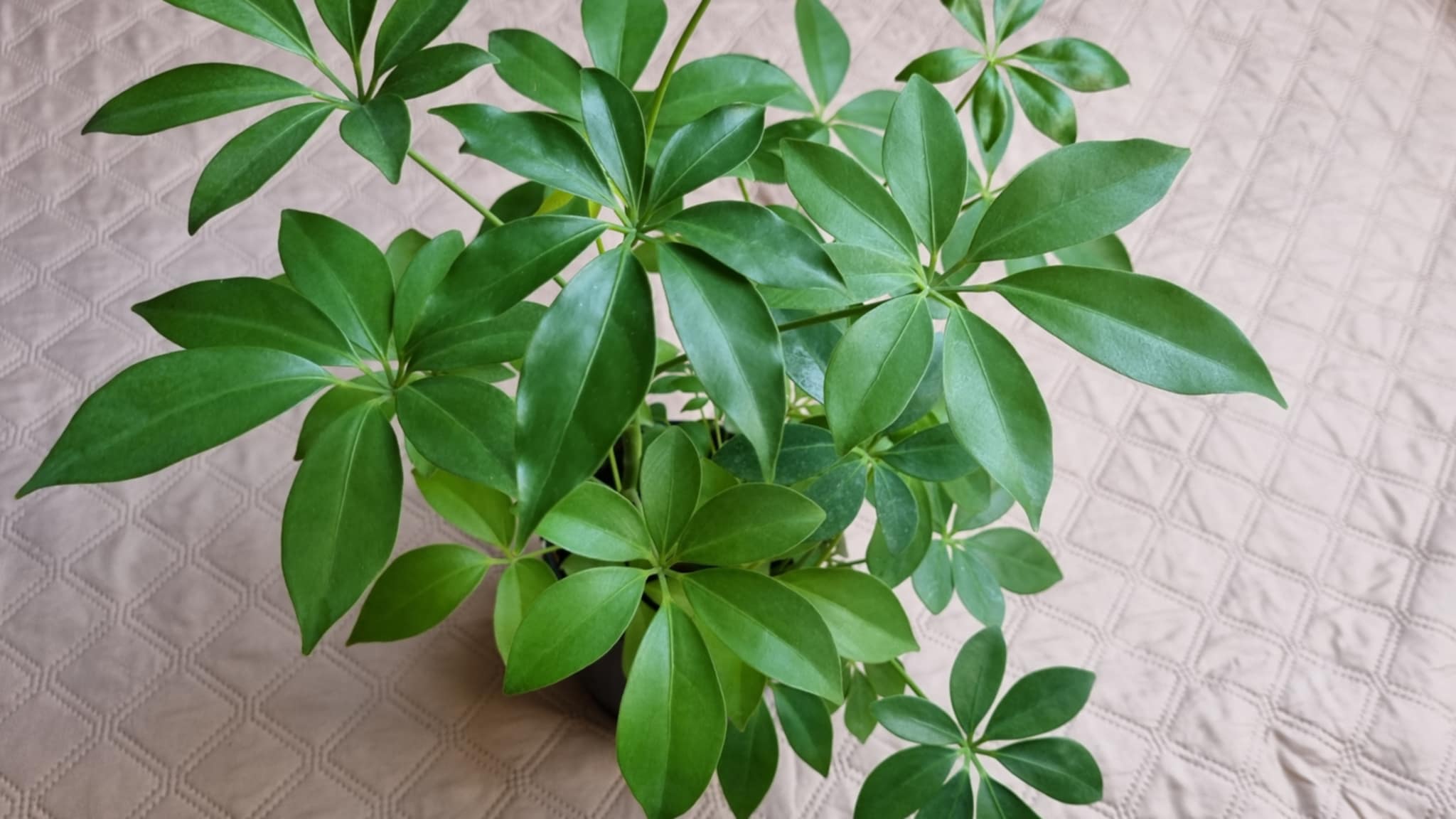
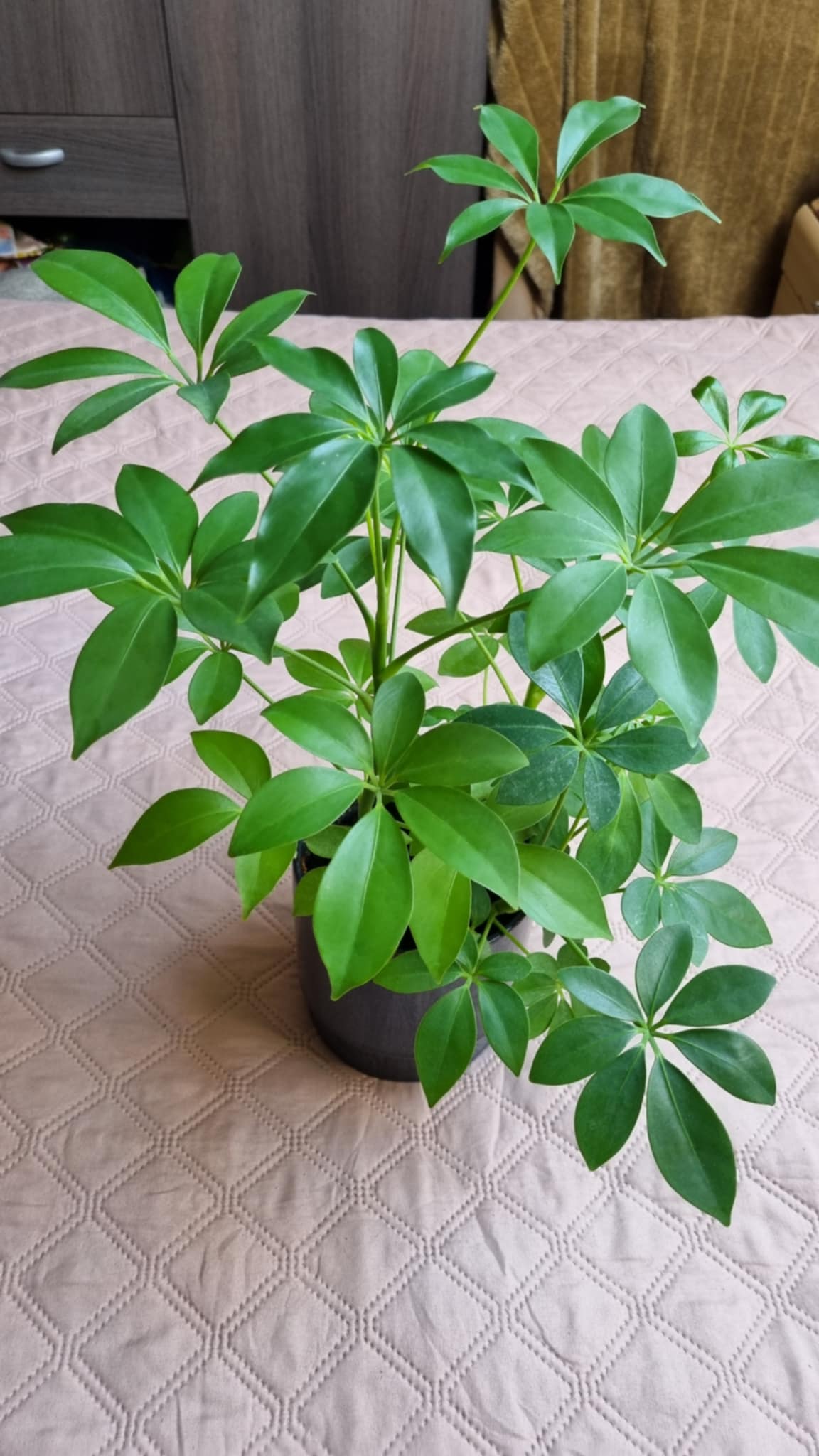
Care Guide for Heptapleurum arboricola
1. Light
- Ideal Light: Heptapleurum arboricola (also known as Schefflera arboricola or Dwarf Umbrella Tree) thrives in bright, indirect light. It can tolerate medium light conditions but growth may slow.
- Light Placement: Place near an east or west-facing window, or a few feet away from a south-facing window with filtered light. The distinctive umbrella-like leaf formations need adequate light to maintain their compact growth pattern.
- Avoid Direct Sunlight: While it can adapt to some morning sun, prolonged direct sunlight can scorch the leaves. In low light, the plant will become leggy with fewer leaves and longer internodes.
2. Watering
- Watering Frequency: Allow the top 1-2 inches of soil to dry out between waterings. Typically, this means watering once every 7-10 days in warmer months and less frequently in winter.
- Seasonal Adjustments: Reduce watering frequency during fall and winter when growth slows. Increase slightly during active growth in spring and summer.
- Watering Technique: Water thoroughly until it drains from the bottom of the pot, then empty the drainage tray to prevent the plant from sitting in water. This plant is more tolerant of underwatering than overwatering.
- Signs of Improper Watering: Yellowing leaves often indicate overwatering, while drooping leaves and dry soil suggest underwatering. Brown leaf tips may indicate either underwatering or low humidity.
3. Humidity
- Humidity Level: Heptapleurum arboricola adapts well to average indoor humidity levels (40-50%) but appreciates higher humidity.
-
How to Increase Humidity:
- Mist the foliage occasionally, especially during dry winter months.
- Place the pot on a tray filled with pebbles and water (ensure the pot isn't sitting directly in water).
- Group with other plants to create a more humid microclimate.
- Use a humidifier nearby if the air is particularly dry.
4. Temperature
- Ideal Temperature: Heptapleurum arboricola prefers average room temperatures between 65-80°F (18-27°C).
- Minimum Temperature: Do not expose to temperatures below 55°F (13°C), as cold temperatures can damage the plant.
- Avoid Temperature Fluctuations: Keep away from cold drafts, air conditioning vents, and heating sources. Sudden temperature changes can cause leaf drop.
5. Soil
- Soil Type: Use a well-draining, peat-based potting mix. A standard houseplant potting soil with added perlite or pumice for improved drainage works well.
- Soil pH: Slightly acidic to neutral soil (pH 6.0-7.0) is preferred.
- Drainage: Good drainage is essential as the plant is susceptible to root rot. Always use pots with drainage holes.
6. Fertilization
- Fertilizer Type: Use a balanced, water-soluble fertilizer diluted to half the recommended strength.
- Fertilizing Frequency: Feed monthly during the growing season (spring and summer). Reduce or stop fertilization in fall and winter when growth slows.
- Application Method: Apply to moist soil to prevent root burn. Over-fertilization can cause brown leaf tips and edges.
- After Repotting: Wait at least one month after repotting before fertilizing to allow the plant to adjust and any root damage to heal.
7. Repotting
- Frequency: Repot every 2-3 years or when the plant becomes rootbound, typically in spring.
- Pot Size: Choose a pot that's 1-2 inches larger in diameter than the current pot. Too large a pot can lead to overwatering issues.
- Repotting Process: Gently remove the plant from its current pot, loosen the root ball slightly, and place in the new pot with fresh potting mix. Water thoroughly after repotting.
8. Pruning
- Regular Maintenance: Remove any yellow or damaged leaves at the base using clean, sharp scissors. This improves the plant's appearance and prevents potential disease spread.
- Shaping: Prune in early spring to control size and shape. Heptapleurum arboricola responds well to pruning and can be shaped into a small tree or bush form. Cutting back stems encourages branching and a fuller appearance.
- Cleaning: Wipe the leaves periodically with a damp cloth to remove dust and enhance the plant's appearance. This also helps the plant photosynthesize more efficiently.
9. Pests and Diseases
- Common Pests: Spider mites, mealybugs, scale insects, and aphids. Regularly inspect the undersides of leaves and leaf joints where pests often hide.
- Pest Prevention: Regular cleaning of leaves and maintaining proper humidity can help prevent pest infestations.
- Treatment: Isolate affected plants immediately. For minor infestations, wipe leaves with a damp cloth or use insecticidal soap. For severe cases, use neem oil or appropriate insecticides.
- Disease Prevention: Avoid overwatering to prevent root rot, which is the most common disease issue with this plant. Ensure good air circulation around the plant.
10. Winter Care
- Reduced Watering: Water less frequently during winter months, allowing the soil to dry out more between waterings.
- Temperature: Maintain temperatures above 60°F (15°C) and protect from cold drafts. This plant is sensitive to cold.
- Light: Move closer to a window if possible, as winter sunlight is less intense. Ensure the plant still receives adequate light during shorter winter days.
- Humidity: Indoor heating can reduce humidity levels in winter, so consider using a humidifier or pebble tray to maintain adequate moisture in the air.
11. Propagation
-
Stengelstekken:
- Take 4-6 inch stem cuttings with at least 2-3 leaf nodes in spring or early summer.
- Remove lower leaves, leaving 2-3 leaves at the top of the cutting.
- Allow the cut end to dry for a few hours, then dip in rooting hormone (optional but helpful).
- Plant in a small pot with moist potting mix and cover with a plastic bag to create humidity. Place in bright, indirect light. Roots should develop in 3-4 weeks.
-
Air Layering:
- For larger plants, air layering can be effective. Make a small incision in a healthy stem.
- Apply rooting hormone to the wound and wrap with moist sphagnum moss.
- Cover with plastic wrap and secure both ends with twist ties or string.
- When roots are visible through the moss (usually after 4-8 weeks), cut below the roots and pot up the new plant.
Heptapleurum arboricola, commonly known as Schefflera arboricola or Dwarf Umbrella Tree, is a popular houseplant prized for its attractive, glossy foliage arranged in a distinctive umbrella-like pattern. Native to Taiwan and Hainan (China), this member of the Araliaceae family typically grows to 4-8 feet tall indoors, though it can reach up to 25 feet in its natural habitat. The plant features compound leaves with 7-9 leaflets radiating from a central point, creating its characteristic umbrella appearance. Leaflets are oval-shaped, leathery, and glossy green, with variegated cultivars displaying cream or yellow markings. As a tropical plant, it prefers warm conditions and moderate humidity but has adapted well to indoor environments, making it relatively easy to care for. The Dwarf Umbrella Tree can be grown as a small tree or bushy shrub depending on pruning, and it responds well to shaping. While it can flower in its natural habitat, blooming is rare indoors. It's worth noting that all parts of the plant contain calcium oxalate crystals, making it toxic to pets and humans if ingested, potentially causing irritation to the mouth and digestive tract. With proper care focusing on bright indirect light, moderate watering, and protection from cold, your Heptapleurum arboricola can be a long-lived, attractive addition to your indoor space.
Comments