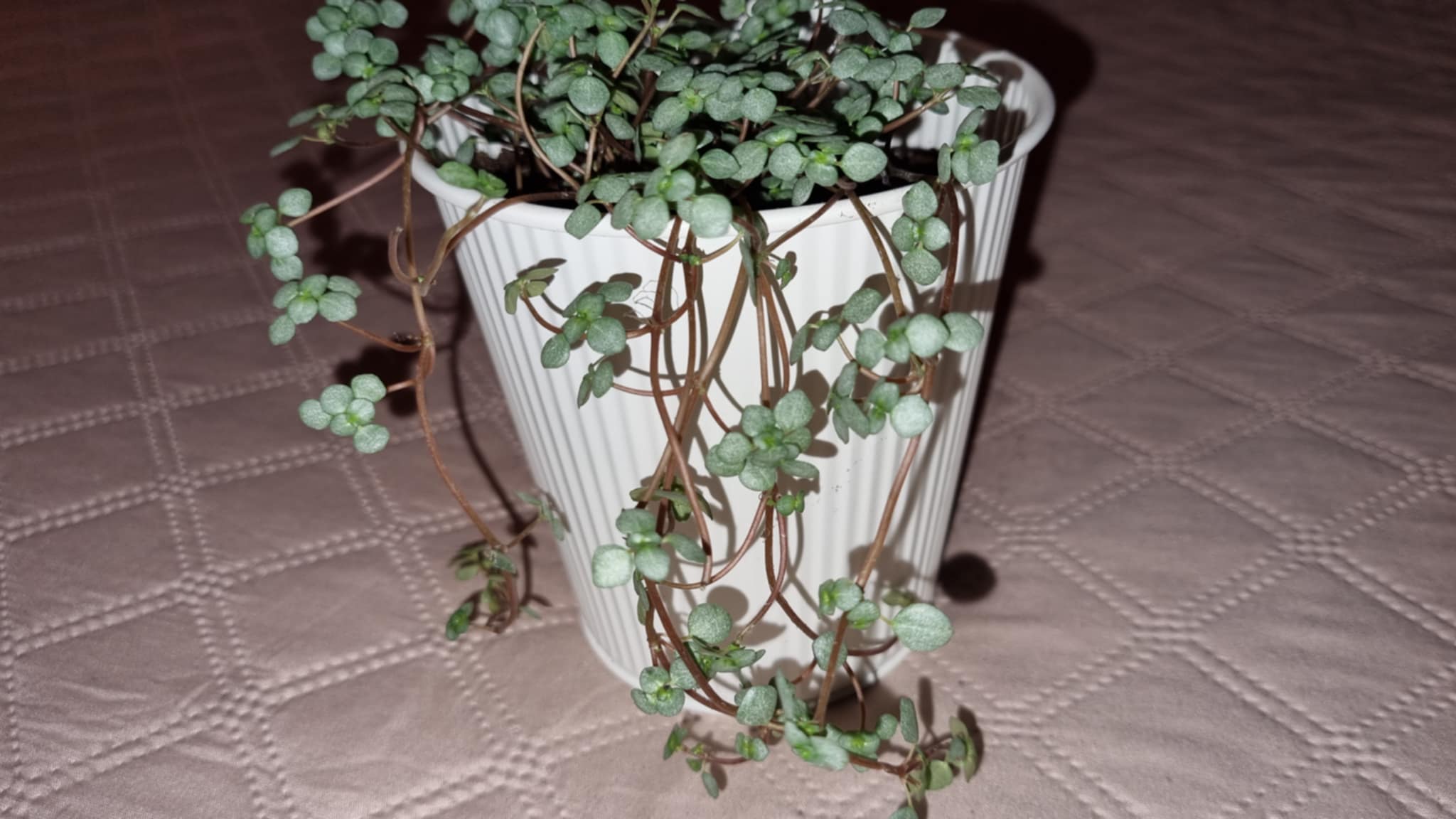
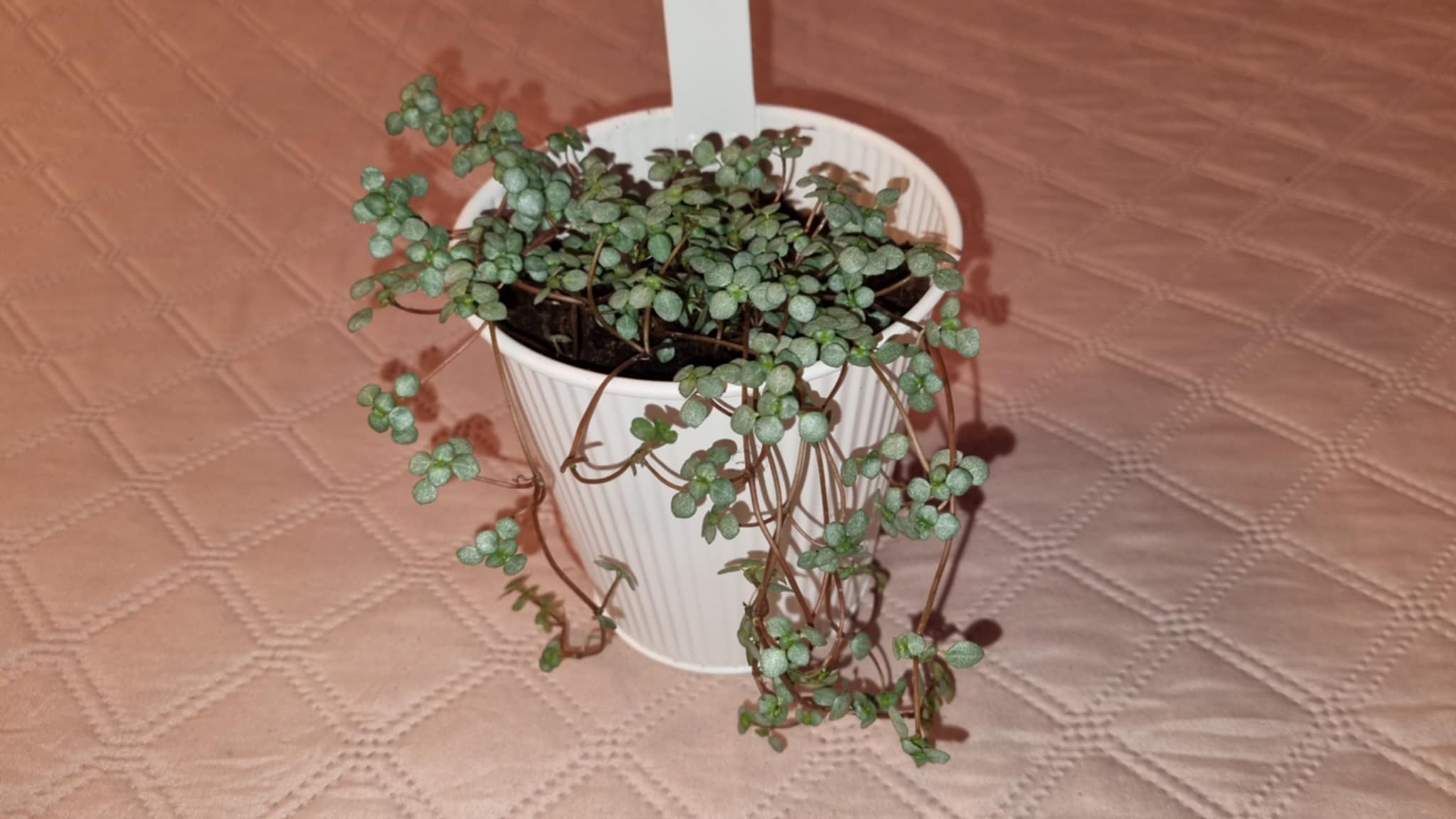
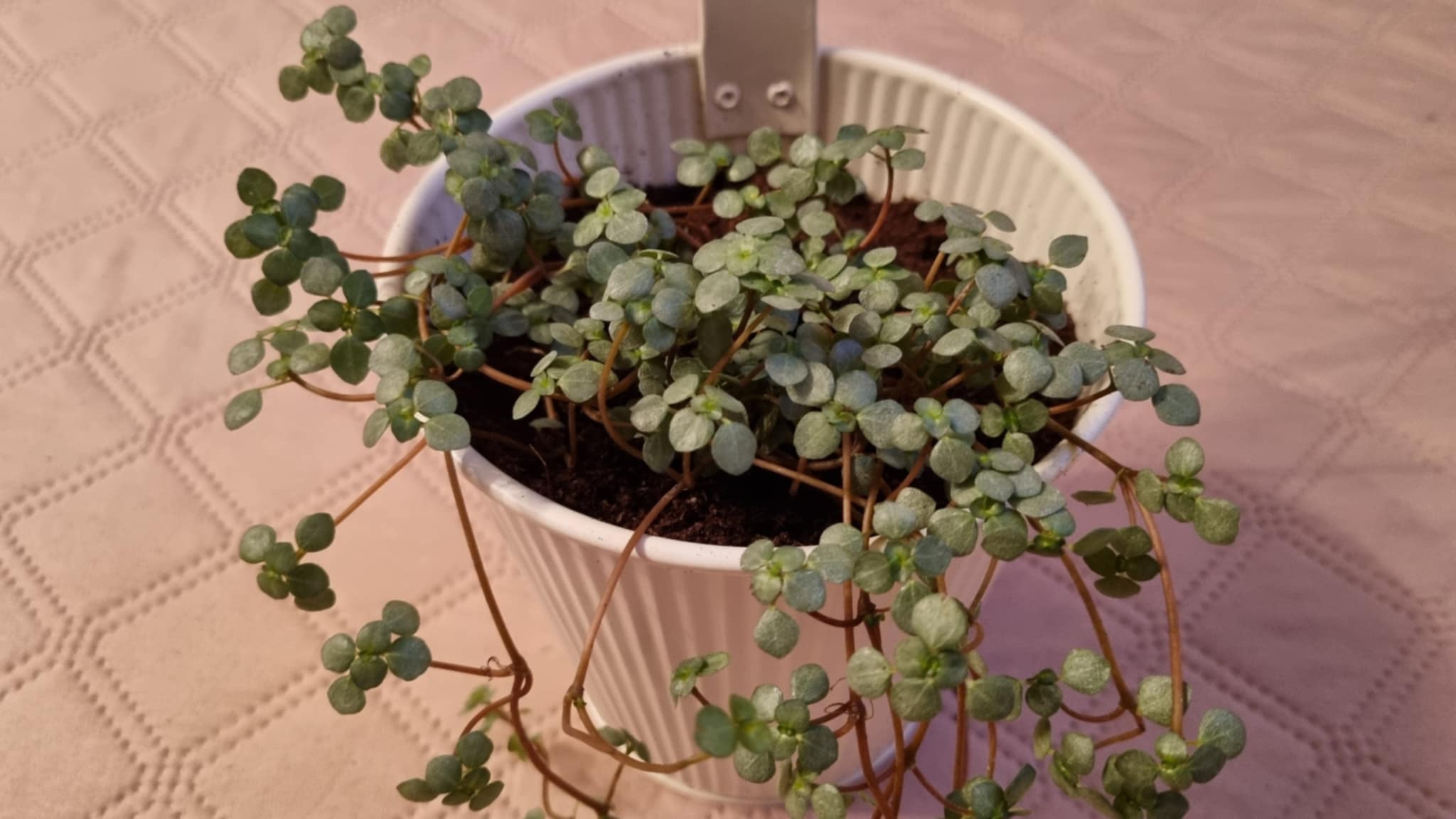
Care Guide for Ceropegia Woodii (String of Hearts)
1. Light
- Ideal Light: Ceropegia Woodii (String of Hearts) thrives in bright, indirect light. It can tolerate some direct morning sun but should be protected from harsh afternoon sunlight.
- Light Placement: Place near an east or west-facing window for optimal growth. It can also adapt to north-facing windows but may grow more slowly with less vibrant coloration.
- Avoid Direct Sunlight: Prolonged direct sunlight, especially during hot afternoons, can scorch the delicate heart-shaped leaves. If grown outdoors, place in dappled shade.
2. Watering
- Watering Frequency: Allow the soil to dry out completely between waterings. String of Hearts is drought-tolerant and susceptible to root rot if overwatered.
- Seasonal Adjustments: During the growing season (spring and summer), water more frequently but still allow soil to dry out. Reduce watering significantly in fall and winter when growth slows.
- Watering Technique: Water thoroughly until it drains from the bottom of the pot, then empty the drainage tray. Bottom watering can also be effective for this plant.
- Signs of Improper Watering: Shriveled leaves indicate underwatering, while soft, mushy stems suggest overwatering. The tubers store water, so the plant can tolerate occasional drought better than excess moisture.
3. Humidity
- Humidity Level: Ceropegia Woodii is adaptable to average indoor humidity levels (40-60%). It does not require high humidity to thrive.
-
How to Increase Humidity:
- Misting is generally not necessary for this plant.
- A humidity tray can be used during extremely dry conditions but is typically not required.
- Grouping with other plants can provide a slightly more humid microclimate if needed.
- A humidifier is rarely necessary for String of Hearts unless your home is extremely dry.
4. Temperature
- Ideal Temperature: String of Hearts prefers average room temperatures between 65-80°F (18-27°C).
- Minimum Temperature: Do not allow temperatures to drop below 50°F (10°C), as cold temperatures can damage the plant.
- Avoid Temperature Fluctuations: Keep away from cold drafts, air conditioning vents, and heating sources. Sudden temperature changes can stress the plant.
5. Soil
- Soil Type: Use a well-draining, light potting mix. A cactus or succulent mix with added perlite works well. The plant needs excellent drainage to prevent root rot.
- Soil pH: Slightly acidic to neutral soil (pH 6.0-7.0) is preferred.
- Drainage: Good drainage is essential as the plant is susceptible to root rot. Use a pot with drainage holes and consider adding a layer of small stones at the bottom of the pot.
6. Fertilization
- Fertilizer Type: Use a balanced liquid fertilizer diluted to half strength, or a slow-release fertilizer formulated for succulents and cacti.
- Fertilizing Frequency: Fertilize monthly during the growing season (spring and summer). Do not fertilize in fall and winter when growth slows.
- Application Method: Apply to moist soil to prevent root burn. Over-fertilization can cause salt buildup and damage to the roots.
- After Repotting: Do not fertilize for several weeks after repotting. With fresh soil, your plant will not need immediate fertilization.
7. Repotting
- Frequency: Repot every 2-3 years or when the plant becomes rootbound. String of Hearts doesn't mind being slightly rootbound and often flowers better in this condition.
- Pot Size: Choose a pot that's only 1-2 inches larger in diameter than the current pot. A shallow pot is often better than a deep one as the roots are relatively shallow.
- Repotting Process: Gently remove the plant from its current pot, shake off excess soil, and place in the new pot with fresh potting mix. Water lightly after repotting and wait a week before resuming normal watering.
8. Pruning
- Regular Maintenance: Remove any dead or damaged vines to promote healthy growth. Use clean, sharp scissors or pruning shears.
- Shaping: Trim back overgrown vines to maintain the desired length and encourage bushier growth. Cuttings can be propagated to create new plants.
- Cleaning: Gently dust the leaves occasionally with a soft brush or cloth to keep them clean and allow for better photosynthesis.
9. Pests and Diseases
- Common Pests: Mealybugs and aphids are the most common pests. Regularly inspect the stems and undersides of leaves for signs of infestation.
- Pest Prevention: Regular inspection and maintaining proper watering practices can help prevent pest infestations.
- Treatment: If pests are found, isolate the plant and treat with insecticidal soap or neem oil. For severe infestations, use a systemic insecticide.
- Disease Prevention: Avoid overwatering to prevent root rot, which is the most common disease issue with this plant. Ensure good air circulation around the plant.
10. Winter Care
- Reduced Watering: During winter dormancy, water very sparingly, only when the tubers begin to shrivel slightly.
- Temperature: Maintain temperatures above 50°F (10°C) and protect from cold drafts.
- Light: Ensure the plant still receives adequate bright, indirect light during shorter winter days. You may need to move it closer to a window.
- Humidity: Indoor heating can reduce humidity levels in winter, but String of Hearts typically tolerates dry air well.
11. Propagation
-
Tuber Propagation:
- String of Hearts produces aerial tubers along its vines that can be used for propagation.
- Press these tubers gently into moist soil while still attached to the parent plant.
- Once rooted (usually after 2-3 weeks), cut the connecting vine and you have a new plant.
- Keep the soil lightly moist until the new plant is established.
-
Stem Cuttings:
- Take 4-6 inch cuttings from healthy vines, ensuring each cutting has several leaves.
- Remove leaves from the bottom inch of the cutting and place in water or directly in moist soil.
- For water propagation, change the water weekly until roots form (2-4 weeks), then transfer to soil.
- For soil propagation, keep the soil lightly moist and place in bright, indirect light until new growth appears.
Ceropegia Woodii, commonly known as String of Hearts or Rosary Vine, is a delicate trailing succulent native to South Africa, Zimbabwe, and Swaziland. It features thin, purple-red stems adorned with small, heart-shaped leaves that are gray-green with silver marbling on the upper surface and purple underneath. The plant produces unusual tubular flowers that resemble small lanterns, typically pink to purplish in color. String of Hearts forms tubers both below ground and along its vines (aerial tubers), which store water and nutrients. These tubers can be used for propagation. The vines can grow quite long, making this plant perfect for hanging baskets or high shelves where the stems can cascade down. With its minimal water requirements and tolerance for average indoor conditions, String of Hearts is relatively low-maintenance and suitable for beginners. The plant has a semi-dormant period in winter when growth slows, and it requires less water during this time. With proper care focusing on bright light, infrequent watering, and protection from extreme temperatures, your String of Hearts can thrive as an attractive, unique addition to your indoor plant collection.
Comments