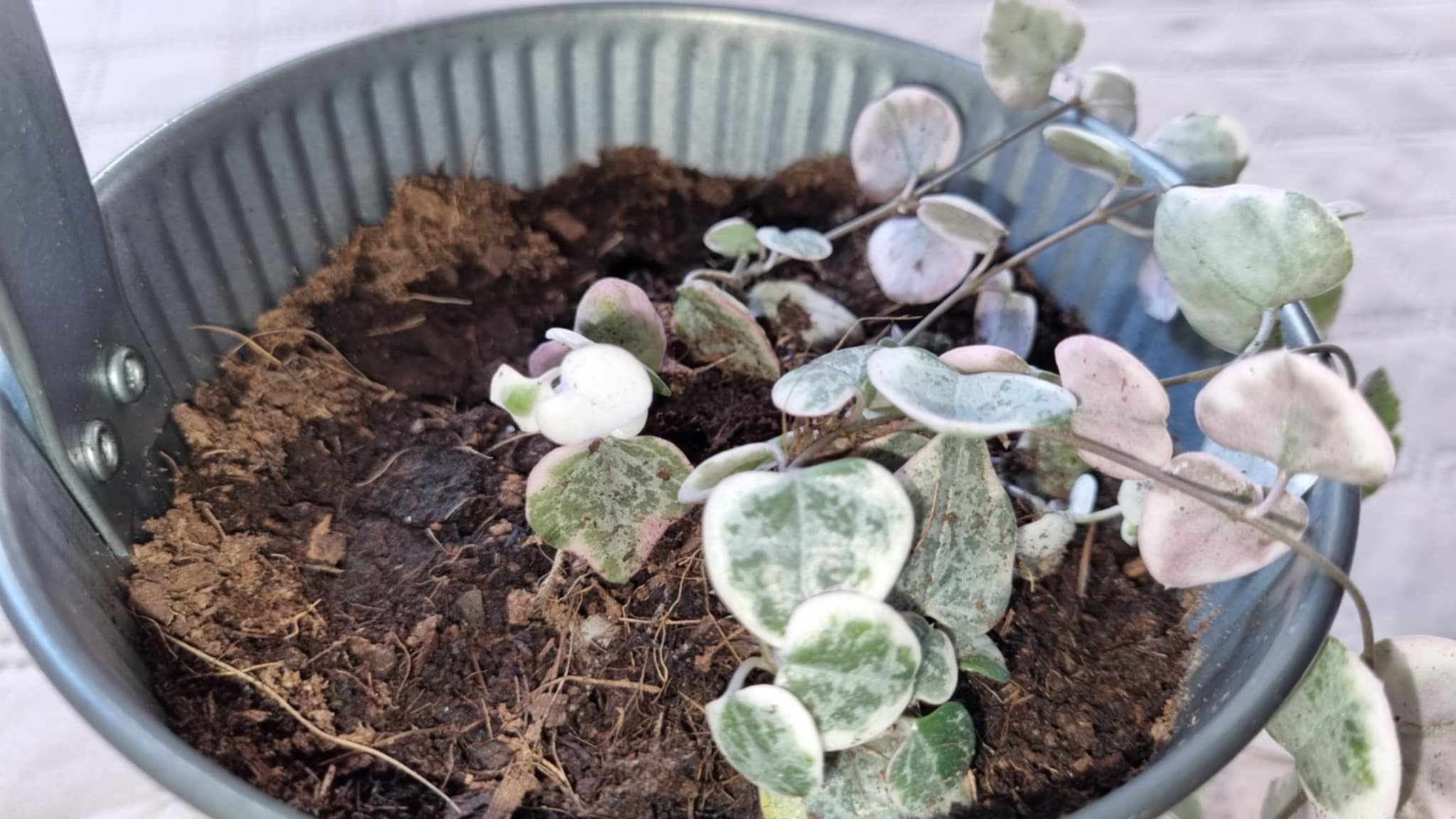


Care Guide for Ceropegia Woodii Variegata (String of Hearts Variegata)
1. Light
- Ideal Light: Ceropegia Woodii Variegata thrives in bright, indirect light to partial direct sun. The variegated leaves need more light than the regular variety to maintain their beautiful cream-white patterns.
- Light Placement: Place near an east or west-facing window, or a few feet back from a south-facing window. Morning sun is beneficial, but protect from harsh afternoon sun.
- Avoid Low Light: Insufficient light will cause the variegation to fade and the vines to become leggy. However, too much direct sun can burn the delicate variegated portions of the leaves.
2. Watering
- Watering Frequency: Allow the soil to dry out almost completely between waterings. This succulent vine stores water in its leaves and tubers, making it drought-tolerant.
- Seasonal Adjustments: Water more frequently during active growth in spring and summer, reduce significantly in fall and winter when growth slows.
- Watering Technique: Water thoroughly when the soil is dry, allowing excess water to drain completely. The tubers can rot if kept too wet.
- Signs of Improper Watering: Shriveled leaves indicate underwatering, while soft, mushy leaves suggest overwatering. The heart-shaped leaves should feel firm and plump.
3. Humidity
- Humidity Level: Ceropegia Woodii Variegata tolerates average household humidity (40-50%). As a succulent, it doesn't require high humidity to thrive.
-
Humidity Notes:
- Avoid misting as water on leaves can lead to fungal issues.
- No need for humidity trays as this plant prefers drier conditions.
- Can be grouped with other succulents but doesn't require it for humidity.
- Humidifiers are not necessary for this plant's care.
4. Temperature
- Ideal Temperature: Ceropegia Woodii Variegata prefers temperatures between 65-80°F (18-27°C).
- Minimum Temperature: Can tolerate brief periods down to 50°F (10°C), but protect from frost. Cold damage can occur below these temperatures.
- Avoid Temperature Fluctuations: Keep away from cold drafts and heating vents. Sudden temperature changes can cause leaf drop.
5. Soil
- Soil Type: Use a well-draining succulent or cactus mix. Add extra perlite or pumice to improve drainage. A mix of regular potting soil, cactus mix, and perlite in equal parts works well.
- Soil pH: Slightly acidic to neutral soil (pH 6.0-7.0) is preferred.
- Drainage: Excellent drainage is crucial as the plant is susceptible to root rot. Use pots with drainage holes and consider adding a layer of gravel at the bottom.
6. Fertilization
- Fertilizer Type: Use a balanced, water-soluble fertilizer diluted to half strength, or a specialized succulent fertilizer.
- Fertilizing Frequency: Feed monthly during the growing season (spring and summer). No fertilization needed in fall and winter.
- Application Method: Apply to slightly moist soil to prevent root burn. Avoid fertilizing newly repotted plants or during dormancy.
- After Repotting: Wait 4-6 weeks after repotting before fertilizing to avoid stressing the plant.
7. Repotting
- Frequency: Repot every 2-3 years or when the tubers become crowded. The plant prefers to be slightly rootbound.
- Pot Size: Choose a pot only slightly larger than the current one. This plant does well in hanging baskets or shallow pots.
- Repotting Process: Carefully remove the plant, check tubers for health, trim any rotted roots, and replant in fresh soil. Handle the delicate vines with care.
8. Pruning
- Regular Maintenance: Remove any dead, yellowed, or damaged vines at the base. Trim long vines to encourage bushier growth.
- Shaping: Can be pruned to maintain desired length and fullness. Pruned sections can be used for propagation.
- Cleaning: Gently dust leaves with a soft, dry brush. Avoid getting water on the leaves when cleaning.
9. Pests and Diseases
- Common Pests: Mealybugs and spider mites can occasionally be an issue. Watch for signs of infestation in leaf axils and along stems.
- Pest Prevention: Regular inspection and good air circulation help prevent pest issues. Isolate new plants before introducing them to your collection.
- Treatment: Treat pest infestations with insecticidal soap or neem oil. Use a cotton swab dipped in alcohol for mealybugs.
- Disease Prevention: Prevent root rot by avoiding overwatering and ensuring good drainage. Watch for signs of fungal issues in humid conditions.
10. Winter Care
- Reduced Watering: Water sparingly during winter months. The plant goes semi-dormant and requires much less water.
- Temperature: Maintain temperatures above 50°F (10°C). Protect from cold drafts from windows.
- Light: May need supplemental lighting during shorter winter days to maintain variegation.
- Winter Care: Keep away from heating vents which can dry out the plant too quickly.
11. Propagation
-
Stem Cuttings: The easiest way to propagate Ceropegia Woodii Variegata:
- Take 4-6 inch stem cuttings with several leaves, ensuring each cutting has at least 2-3 nodes.
- Remove lower leaves and let the cuts callus for 24 hours.
- Place cuttings in well-draining soil or water. Soil propagation typically yields better results.
- Keep soil slightly moist and provide bright, indirect light.
- Roots should develop within 2-4 weeks. Tubers will form over time.
-
Tuber Division:
- When repotting, you can carefully divide tubers that have formed multiple growth points.
- Ensure each division has healthy roots and at least one growing point.
- Plant divisions in well-draining soil and water sparingly until new growth appears.
Ceropegia Woodii Variegata, commonly known as String of Hearts Variegata or Chain of Hearts Variegata, is a stunning trailing succulent vine prized for its delicate, heart-shaped leaves featuring cream-white variegation. Native to South Africa, this member of the Apocynaceae family is beloved for its elegant trailing habit and unique leaf patterns. The variegated form is more rare and sought-after than the regular variety, displaying beautiful cream to pink marbling on its small, heart-shaped leaves. The vines can grow several feet long, making it perfect for hanging baskets or high shelves. Underground tubers store water and nutrients, contributing to the plant's drought tolerance. While the plant may produce small, tubular purple flowers, it's primarily grown for its attractive variegated foliage. This semi-succulent plant is relatively easy to care for once its basic needs are met, though the variegated form requires more light than the standard variety to maintain its coloration. With proper care focusing on well-draining soil, careful watering, and adequate light, your String of Hearts Variegata can become a stunning trailing specimen.
Comments