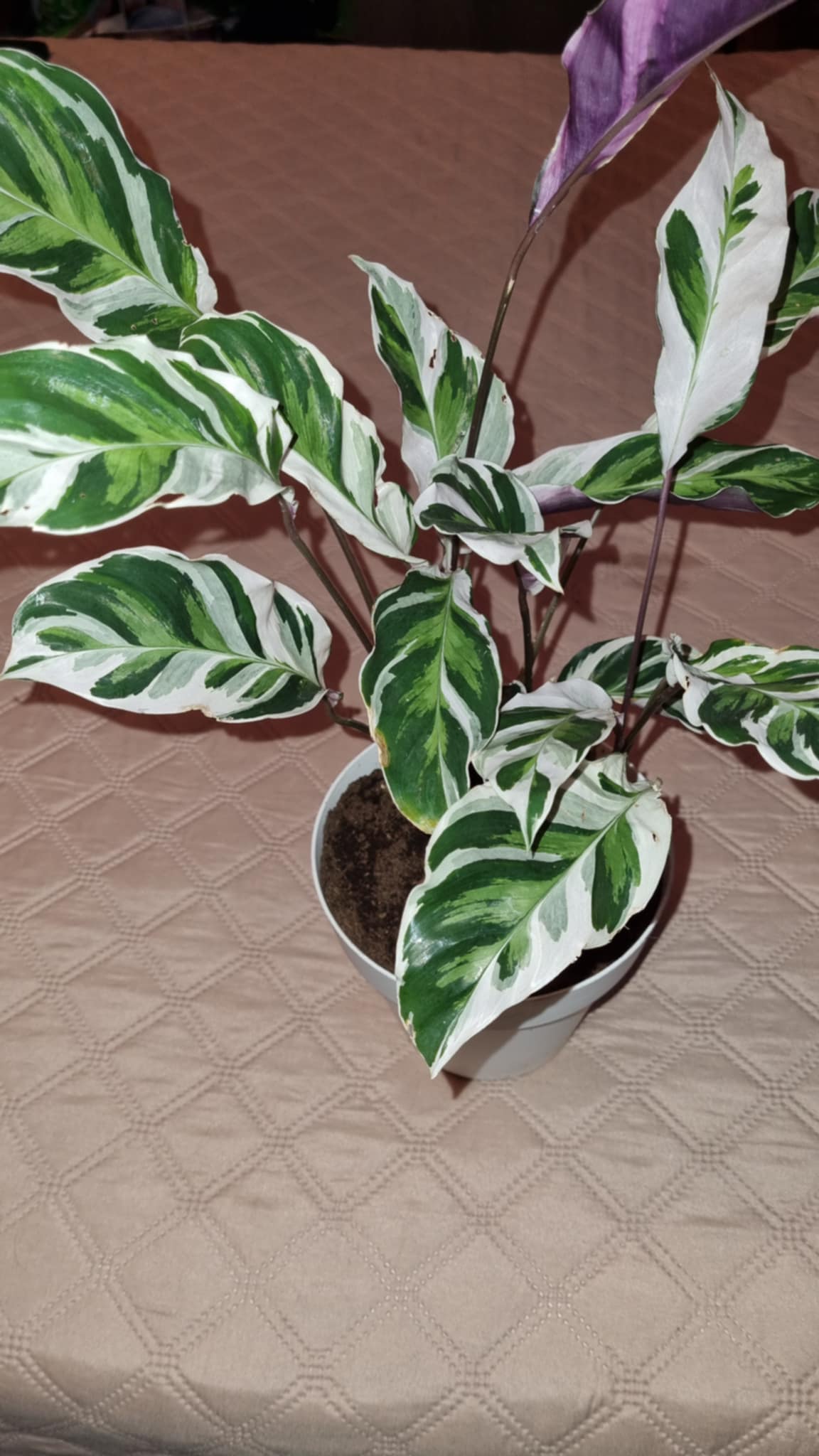

Care Guide for Calathea Fusion White
1. Light
- Ideal Light: Calathea Fusion White thrives in medium to bright indirect light. It cannot tolerate direct sunlight as it will burn the delicate foliage.
- Light Placement: Place your Calathea near a north or east-facing window, or a few feet away from a south or west-facing window with a sheer curtain to filter the light.
- Avoid Direct Sunlight: Direct sun exposure will quickly fade the striking patterns and cause brown, crispy leaf edges. If you notice leaf scorching, move the plant to a less bright location immediately.
2. Watering
- Watering Frequency: Keep the soil consistently moist but not soggy. Water when the top inch of soil begins to dry out, typically every 7-10 days depending on your environment.
- Seasonal Adjustments: Water more frequently during active growth in spring and summer, and reduce watering in fall and winter. Calatheas are sensitive to water quality — use filtered, distilled, or rainwater if possible.
- Watering Technique: Water thoroughly until it flows from the drainage holes, then empty the drainage tray to prevent the plant sitting in water. Avoid getting water on the leaves, especially in cooler temperatures.
- Signs of Improper Watering: Crispy, brown leaf edges often indicate underwatering or low humidity, while yellowing leaves and soft stems suggest overwatering. Calatheas can be dramatic – their leaves will curl or fold when thirsty.
3. Humidity
- Humidity Level: Calathea Fusion White requires high humidity (60% or higher) to thrive. It originates from tropical rainforests and will struggle in dry environments.
-
How to Increase Humidity:
- Mist around the plant daily, though this provides only temporary relief.
- Place the pot on a humidity tray filled with pebbles and water (ensure the pot isn't sitting directly in water).
- Group with other moisture-loving plants to create a more humid microclimate.
- Use a humidifier nearby — this is the most effective method for maintaining proper humidity levels for your Calathea.
4. Temperature
- Ideal Temperature: Calathea Fusion White prefers warm temperatures between 65-80°F (18-27°C). It grows best in stable conditions without fluctuations.
- Minimum Temperature: Do not expose your Calathea to temperatures below 60°F (15°C), as cold temperatures will cause significant damage to the plant.
- Avoid Temperature Fluctuations: Keep away from cold drafts, air conditioning vents, doors that open to the outside, and heating sources. Sudden temperature changes will cause leaf damage and stress.
5. Soil
- Soil Type: Use a well-draining, lightweight potting mix with good moisture retention. A mix of regular potting soil with extra perlite, orchid bark, and some coco coir or peat moss works well.
- Soil pH: Slightly acidic to neutral soil (pH 6.0-7.0) is preferred.
- Drainage: While the soil should retain some moisture, good drainage is essential to prevent root rot. Use a pot with drainage holes and ensure excess water can escape easily.
6. Fertilization
- Fertilizer Type: Use a balanced, water-soluble fertilizer diluted to half the recommended strength. Alternatively, a fertilizer formulated for foliage plants works well.
- Fertilizing Frequency: Feed monthly during the growing season (spring and summer). Reduce or stop fertilization in fall and winter when growth naturally slows.
- Application Method: Apply to moist soil to prevent root burn. Calatheas are sensitive to salt buildup, so flush the soil thoroughly with water every few months to remove accumulated fertilizer salts.
- After Repotting: Wait 2-3 months before fertilizing newly repotted plants to allow roots to establish and avoid burn from excess nutrients.
7. Repotting
- Frequency: Repot every 1-2 years or when the plant becomes rootbound, preferably in spring or early summer when the plant is actively growing.
- Pot Size: Choose a pot that's only 1-2 inches larger in diameter than the current pot. Too large a pot can hold excess moisture and lead to root rot.
- Repotting Process: Gently remove the plant from its current pot, loosen the root ball slightly, and place in the new pot with fresh potting mix. Water thoroughly after repotting and provide extra humidity during the adjustment period.
8. Pruning
- Regular Maintenance: Remove any yellow, brown, or damaged leaves by cutting them at the base with clean, sharp scissors or pruning shears. This improves the plant's appearance and prevents disease spread.
- Shaping: Calatheas generally don't require shaping, as they naturally grow in an attractive rosette form. Focus on removing damaged leaves rather than shaping the plant.
- Cleaning: Dust the leaves regularly with a soft, damp cloth to keep them clean and vibrant. This also helps the plant photosynthesize efficiently and prevents pest infestations.
9. Pests and Diseases
- Common Pests: Spider mites, mealybugs, aphids, and thrips are the most common pests. Spider mites especially thrive in dry conditions and can quickly damage Calatheas.
- Pest Prevention: Maintain high humidity, regularly clean leaves, and inspect your plant frequently, especially the undersides of leaves where pests often hide.
- Treatment: Isolate infected plants immediately. For mild infestations, wipe leaves with a solution of water and mild soap or neem oil. For severe cases, use an appropriate insecticidal soap or horticultural oil following package directions.
- Disease Prevention: Fusarium leaf spot and root rot are common issues, usually caused by overwatering or poor drainage. Ensure proper watering practices and good air circulation to prevent these problems.
10. Winter Care
- Reduced Watering: Water less frequently in winter, but don't let the soil dry out completely. Allow the top 1-2 inches to dry between waterings.
- Temperature: Maintain temperatures above 65°F (18°C) and protect from cold drafts. Keep plants away from cold windows during winter nights.
- Light: As days shorten in winter, you may need to move your Calathea to a brighter location, but still avoid direct sun. Consider supplementing with grow lights if natural light is limited.
- Humidity: Indoor heating can significantly reduce humidity levels in winter. Use a humidifier, group plants together, or place on humidity trays to maintain the high humidity Calatheas need.
11. Propagation
-
Division: The best method for propagating Calathea Fusion White:
- Wait until repotting time when the plant has outgrown its pot and has multiple stems or growth points.
- Gently remove the plant from its pot and carefully separate the root ball into sections, ensuring each division has healthy roots and at least 2-3 leaves.
- Plant each division in its own pot with fresh, well-draining potting mix.
- Water thoroughly and place in a warm location with high humidity and indirect light until established.
- Expect some stress response after division; the plant may look somewhat unhappy for a few weeks while it establishes in its new pot.
-
Propagation Note: Calatheas cannot be propagated from leaf cuttings or stem cuttings. Division is the only reliable method for home propagation.
- Be patient with newly divided plants as they can take time to adjust. Provide extra humidity and avoid fertilizing until you see new growth, which indicates the plant has established itself.
Calathea Fusion White (Calathea 'Fusion White') is a stunning tropical plant beloved for its dramatic foliage. It features striking white and green variegated leaves with purple undersides, creating a beautiful contrast. Like other prayer plants, it displays nyctinasty – the daily movement of leaves that fold up at night and open during the day, resembling hands in prayer. This movement is controlled by a tiny joint between the leaf and stem. Native to the tropical rainforests of South America, particularly Brazil, Calatheas grow as understory plants beneath the forest canopy in their natural habitat. The Fusion White variety is particularly prized for its artistic leaf patterns and clean white variegation. While Calatheas have a reputation for being somewhat demanding, their specific needs simply reflect their tropical origins – they require humidity, consistent moisture, and protection from harsh light. When these conditions are met, they reward plant parents with spectacular foliage that serves as living art in any indoor space. Calatheas are non-toxic to humans, cats, and dogs, making them safe choices for pet owners and households with children.
Comments