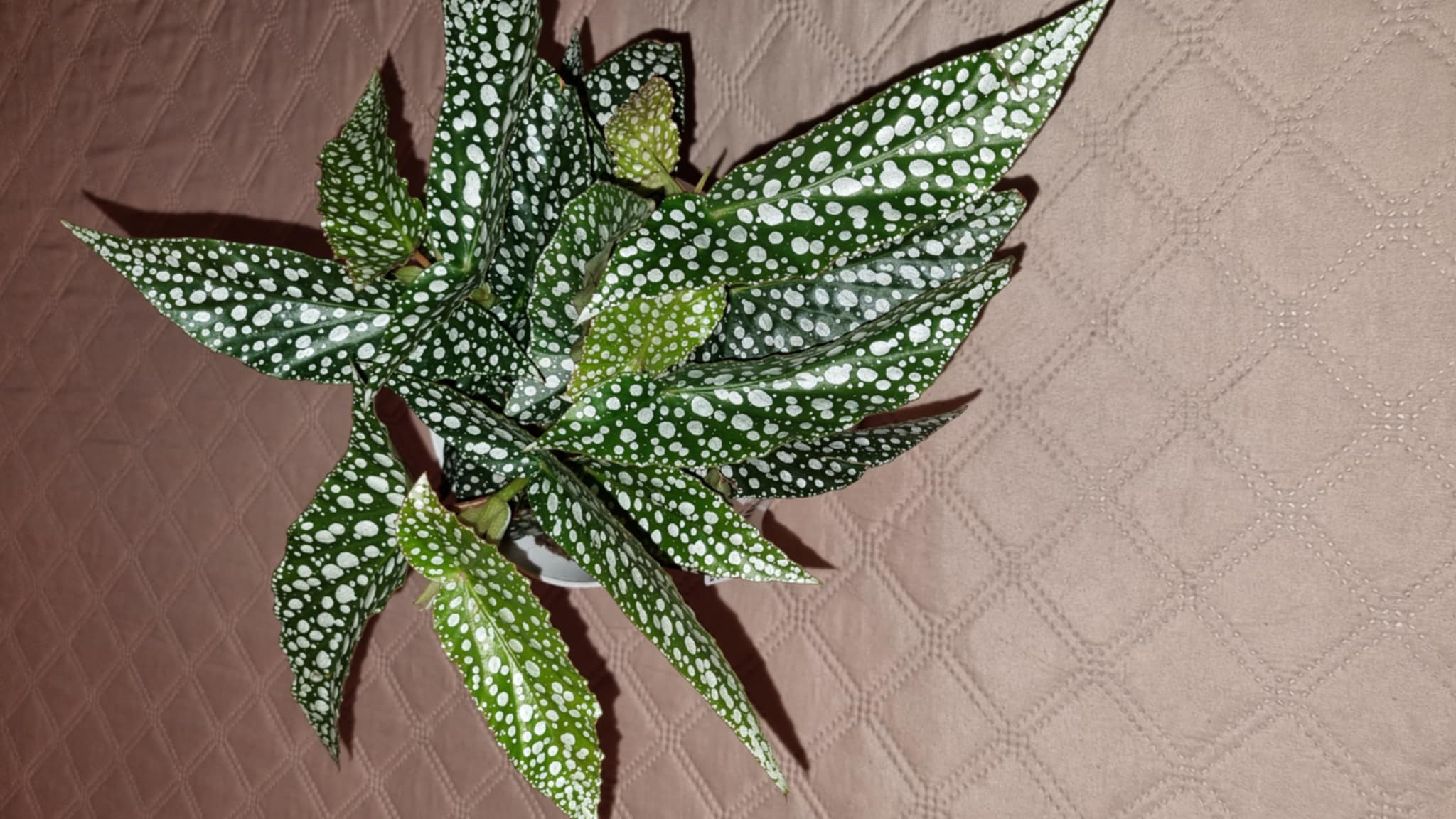
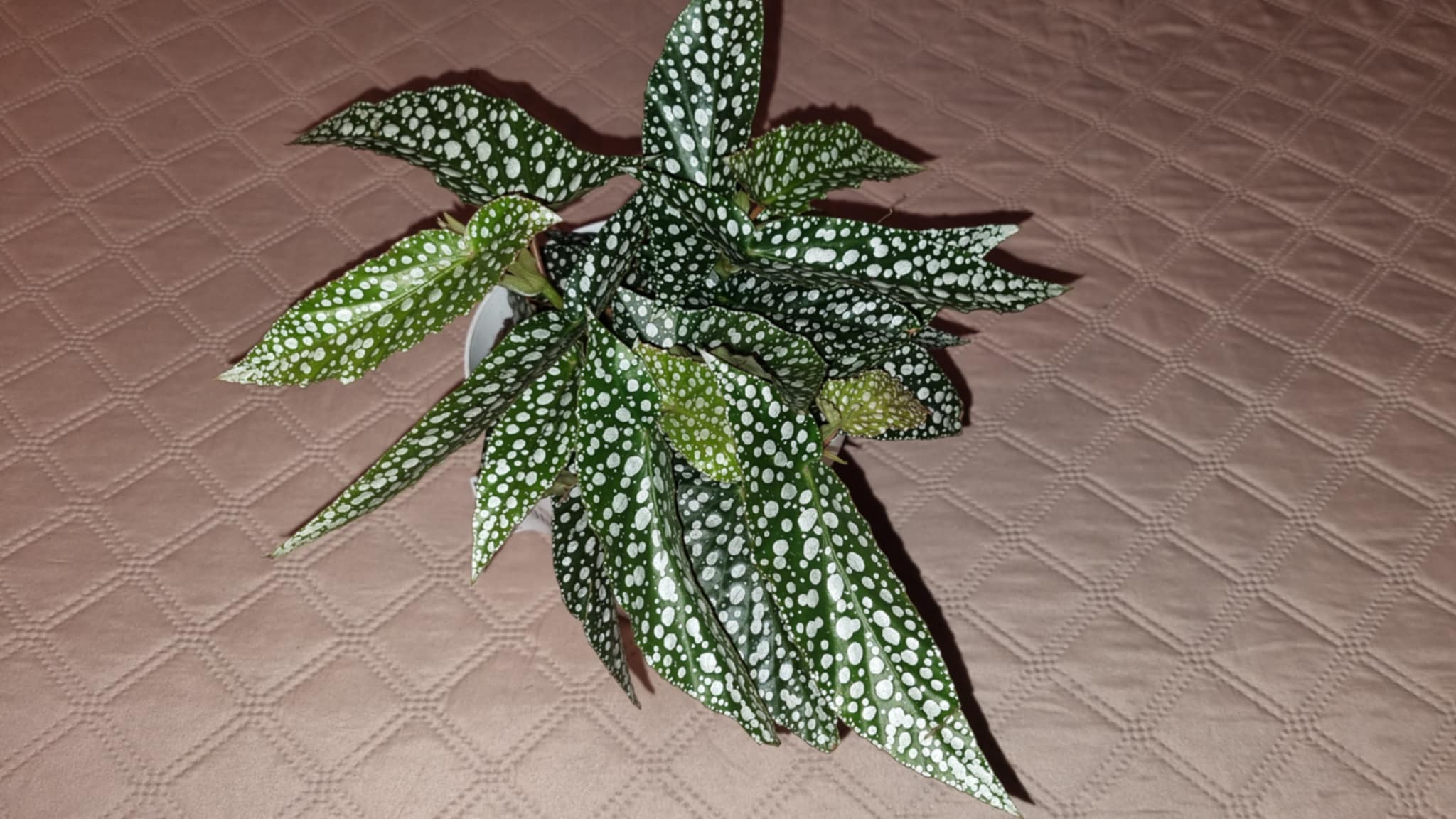
Care Guide for Begonia Cane Double Dot
1. Light
- Ideal Light: Begonia maculata (Polka Dot Begonia or Angel Wing Begonia) thrives in bright, indirect light. Morning sun is beneficial, but protect it from harsh afternoon sun.
- Light Placement: Place near an east or north-facing window, or a few feet away from a south or west-facing window with sheer curtains to filter the light.
- Avoid Direct Sunlight: Direct sun, especially during hot afternoons, can scorch the delicate leaves. If leaves start turning brown or yellow, move the plant to a less bright position.
2. Watering
- Watering Frequency: Allow the top inch of soil to dry out between waterings. These Begonia's drogen liever iets uit dan constant vochtig te blijven.
- Seasonal Adjustments: Water more frequently during active growth in spring and summer, and reduce watering in fall and winter when growth slows.
- Watering Technique: Water at the base of the plant to keep the leaves dry, which helps prevent fungal issues. Empty drainage trays promptly to prevent the plant from sitting in water.
- Signs of Improper Watering: Yellowing leaves often indicate overwatering, while drooping leaves that aren't yellow may signal underwatering. Begonia maculata is more susceptible to damage from overwatering than underwatering.
3. Humidity
- Humidity Level: Begonia maculata prefers moderate to high humidity (50-70%). It can adapt to average indoor humidity but will thrive with more moisture in the air.
-
How to Increase Humidity:
- Mist around the plant (not directly on leaves) with room temperature water, or use a humidifier.
- Place the pot on a tray filled with pebbles and water, ensuring the pot doesn't sit directly in water.
- Group with other humidity-loving plants to create a more humid microclimate.
- Use a humidifier nearby, especially during winter when indoor air is drier due to heating systems.
4. Temperature
- Ideal Temperature: Begonia maculata thrives in temperatures between 65-75°F (18-24°C) during the day and slightly cooler at night.
- Minimum Temperature: Do not expose to temperatures below 60°F (15°C), as cold temperatures can damage the plant and cause leaf drop.
- Avoid Temperature Fluctuations: Keep away from cold drafts, air conditioning vents, and heating sources. Sudden temperature changes can stress the plant and cause leaf drop.
5. Soil
- Soil Type: Use a well-draining, lightweight potting mix rich in organic matter. A mix designed for African violets or a standard potting mix with additional perlite works well.
- Soil pH: Slightly acidic to neutral soil (pH 6.0-7.0) is preferred.
- Drainage: Excellent drainage is essential as these begonias are susceptible to root rot. Use a pot with drainage holes and consider adding extra perlite or orchid bark to improve aeration.
6. Fertilization
- Fertilizer Type: Use a balanced, water-soluble fertilizer diluted to half the recommended strength. A fertilizer with higher phosphorus content can encourage blooming.
- Fertilizing Frequency: Feed every 2-4 weeks during the growing season (spring and summer). Reduce or stop fertilization in fall and winter when growth naturally slows.
- Application Method: Apply to moist soil to prevent root burn. Over-fertilization can cause salt buildup and damage the roots, resulting in brown leaf edges.
- After Repotting: Wait about a month before fertilizing to allow the plant to establish and recover from any potential transplant shock.
7. Repotting
- Frequency: Repot every 12-18 months or when the plant becomes rootbound, preferably in spring when active growth resumes.
- Pot Size: Choose a pot that's 1-2 inches larger in diameter than the current pot. Too large a pot can lead to overwatering issues as the soil stays wet longer.
- Repotting Process: Gently remove the plant from its current pot, loosen the root ball slightly, and place in the new pot with fresh potting mix. Water thoroughly after repotting.
8. Pruning
- Regular Maintenance: Remove any dead, damaged, or diseased leaves at their base using clean, sharp scissors or pruning shears.
- Shaping: Prune leggy stems to encourage bushier growth and maintain the plant's attractive appearance. Pinching back growing tips will promote branching.
- Cleaning: Dust the distinctive spotted leaves occasionally with a soft, damp cloth to keep them looking their best and ensure they can efficiently photosynthesize.
9. Pests and Diseases
- Common Pests: Spider mites, mealybugs, aphids, and fungus gnats. Regularly inspect the undersides of leaves and stems where pests often hide.
- Pest Prevention: Maintain appropriate humidity levels and good air circulation. Periodically clean the leaves and isolate new plants before introducing them to your collection.
- Treatment: Treat mild infestations by wiping leaves with insecticidal soap or neem oil solution. For more severe cases, use a systemic insecticide following package directions.
- Disease Prevention: Powdery mildew and botrytis (gray mold) can affect these plants, especially in humid conditions with poor air circulation. Avoid wetting the leaves when watering and provide good ventilation.
10. Winter Care
- Reduced Watering: As growth slows in winter, reduce watering frequency but don't allow the soil to dry out completely.
- Temperature: Maintain temperatures above 60°F (15°C) and protect from cold drafts that can cause sudden temperature drops.
- Light: As days shorten, ensure the plant still receives adequate bright, indirect light. You may need to move it closer to a window or supplement with grow lights.
- Humidity: Indoor heating systems can reduce humidity levels in winter, so consider using a humidifier or pebble tray to maintain adequate moisture levels in the air.
11. Propagation
-
Stem Cuttings: The easiest method for propagating Begonia maculata:
- Take 4-6 inch cuttings from healthy stems, ensuring each cutting has at least one node and preferably 2-3 leaves.
- Remove lower leaves, leaving just a few at the top, and dip the cut end in rooting hormone (optional but helpful).
- Place cuttings in water or moist potting mix. If using water, change it weekly to prevent rot.
- Keep in bright, indirect light and maintain high humidity by covering with a clear plastic bag or dome, opening daily for air circulation.
- Roots should develop within 2-4 weeks. Once roots are 1-2 inches long, transplant water-rooted cuttings to soil.
-
Leaf Cuttings:
- Select a healthy mature leaf and cut it into triangular sections, each with a main vein.
- Insert the pointed end of each section into moist potting mix, with about ⅓ of the leaf below the surface.
- Cover with a clear plastic dome or bag to maintain humidity and place in bright, indirect light.
- New plantlets will eventually form at the base of the leaf cutting, though this method takes longer than stem cuttings.
Begonia maculata, commonly known as Polka Dot Begonia or Angel Wing Begonia, is a stunning cane-type begonia native to Brazil. It features distinctive olive-green leaves with silvery-white spots on the upper surface and striking red-purple undersides, creating a dramatic contrast. These asymmetrical, wing-shaped leaves grow on bamboo-like stems that can reach 2-3 feet tall when mature. During blooming periods, usually spring through fall, the plant produces clusters of delicate white or pale pink flowers that hang like jewels from the stems. This Begonia is prized for its ornamental foliage rather than its flowers, though both are attractive. As a tropical plant, it requires some specific care to thrive indoors, particularly regarding humidity and watering. With proper care, Begonia maculata makes a striking statement piece in any indoor plant collection. Its unique appearance, with those characteristic polka-dotted leaves, brings visual interest and a touch of the exotic to home decor. While sometimes considered challenging for beginners, once you understand its needs, this Begonia can be a rewarding and long-lived houseplant.
Comments