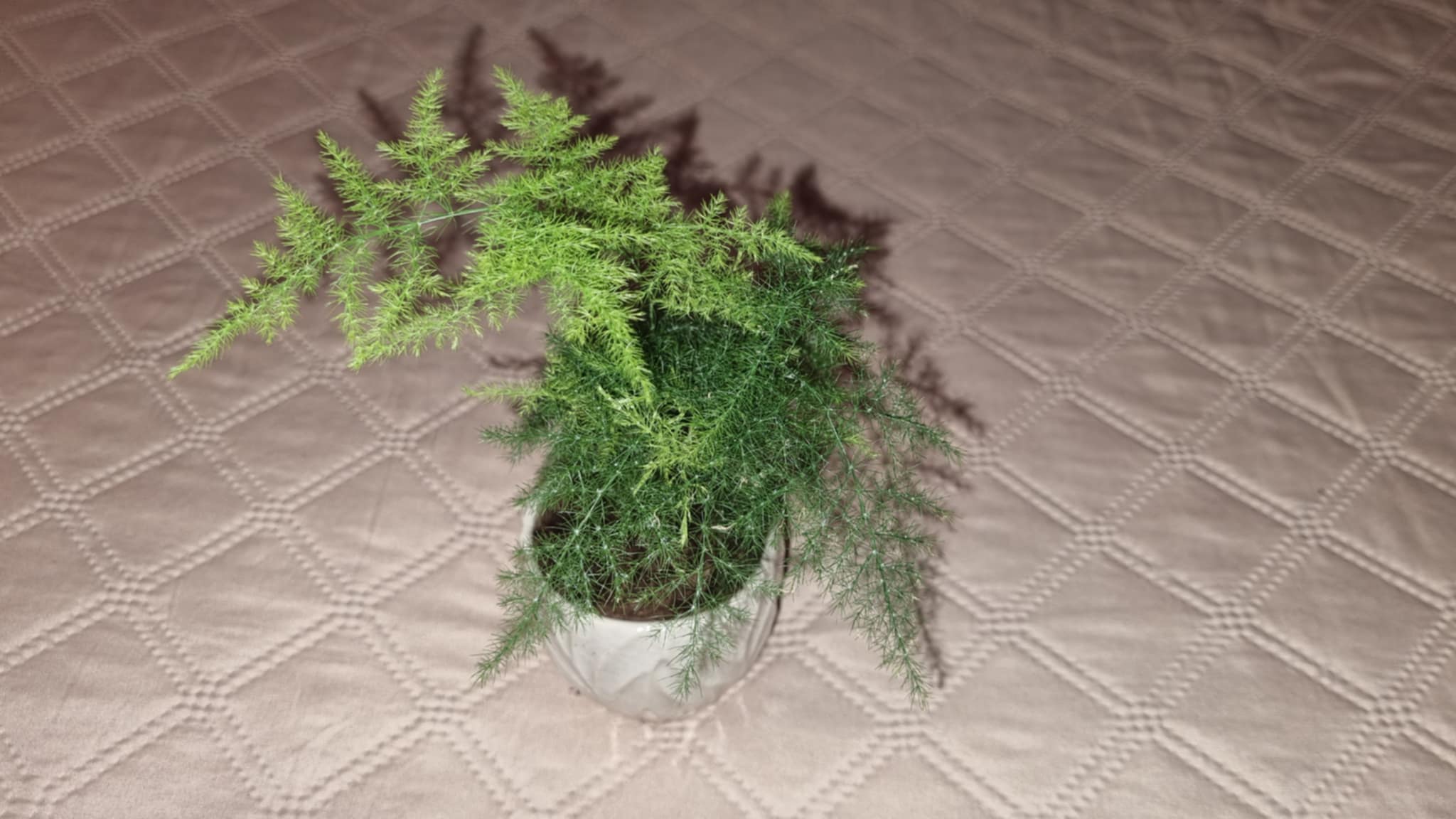
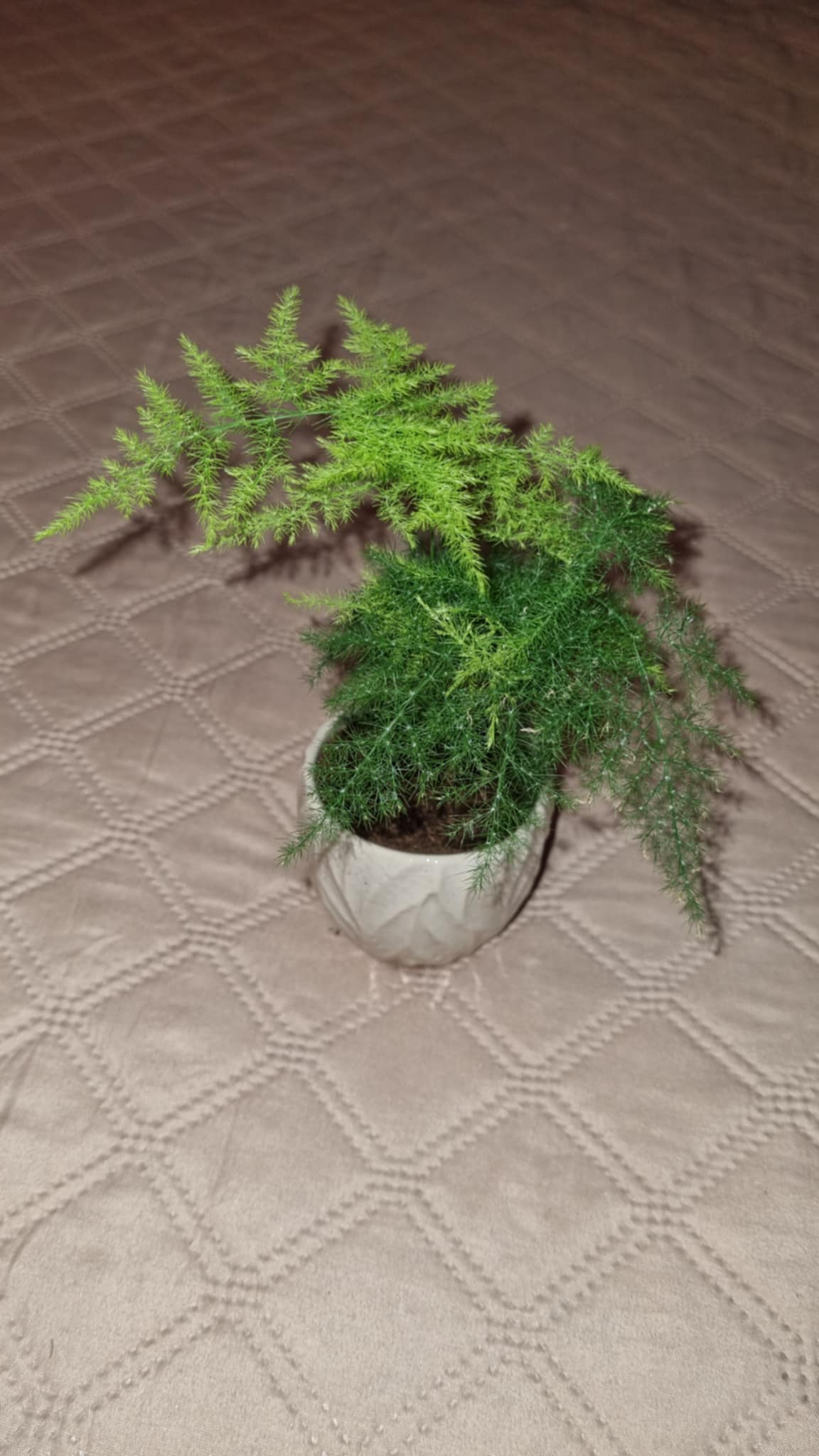
Care Guide for Asparagus
1. Light
- Ideal Light: Asparagus Fern (Asparagus setaceus, A. plumosus, or A. densiflorus) thrives in bright, indirect light. It can tolerate some direct morning sun but prefers filtered light.
- Light Placement: Place in an eastern or northern exposure, or a few feet away from a southern or western window with filtered light. It can also adapt to medium light conditions.
- Avoid Direct Sunlight: Prolonged direct sunlight, especially during hot afternoons, can scorch the delicate fronds. If grown outdoors, place in dappled shade.
2. Watering
- Watering Frequency: Keep the soil consistently moist but not soggy. Water when the top inch of soil begins to dry out.
- Seasonal Adjustments: During the growing season (spring and summer), water more frequently. Reduce watering in fall and winter, but never allow the soil to dry out completely.
- Watering Technique: Water thoroughly until it drains from the bottom of the pot, then empty the drainage tray to prevent the plant from sitting in water.
- Signs of Improper Watering: Yellowing fronds often indicate overwatering, while brown tips suggest underwatering or low humidity. Asparagus ferns are more tolerant of underwatering than overwatering.
3. Humidity
- Humidity Level: Asparagus Fern prefers moderate to high humidity (50-60%) but can adapt to average indoor humidity levels.
-
How to Increase Humidity:
- Mist the foliage regularly with room temperature water.
- Place the pot on a tray filled with pebbles and water (ensure the pot isn't sitting directly in water).
- Group with other plants to create a more humid microclimate.
- Use a humidifier nearby, especially during winter when indoor air is drier.
4. Temperature
- Ideal Temperature: Asparagus Fern prefers average room temperatures between 65-75°F (18-24°C).
- Minimum Temperature: Do not allow temperatures to drop below 55°F (13°C), as cold temperatures can damage the plant.
- Avoid Temperature Fluctuations: Keep away from cold drafts, air conditioning vents, and heating sources. Sudden temperature changes can stress the plant.
5. Soil
- Soil Type: Use a well-draining, rich potting mix with good moisture retention. A mixture of regular potting soil with peat moss and perlite works well.
- Soil pH: Slightly acidic to neutral soil (pH 6.0-7.0) is preferred.
- Drainage: Good drainage is essential as the plant is susceptible to root rot. Use a pot with drainage holes to prevent water from collecting at the bottom.
6. Fertilization
- Fertilizer Type: Use a balanced liquid fertilizer diluted to half strength, or a slow-release fertilizer formulated for houseplants.
- Fertilizing Frequency: Fertilize monthly during the growing season (spring and summer). Reduce or stop fertilization in fall and winter when growth slows.
- Application Method: Apply to moist soil to prevent root burn. Over-fertilization can cause brown leaf tips and edges.
- After Repotting: Do not fertilize for several weeks after repotting. With fresh soil, your plant will not need immediate fertilization.
7. Repotting
- Frequency: Repot every 1-2 years or when the plant becomes rootbound, typically in spring.
- Pot Size: Choose a pot that's 1-2 inches larger in diameter than the current pot. Asparagus ferns have tuberous roots that can break plastic pots, so consider using ceramic or terracotta.
- Repotting Process: Gently remove the plant from its current pot, loosen the root ball slightly, and place in the new pot with fresh potting mix. Water thoroughly after repotting.
8. Pruning
- Regular Maintenance: Remove yellow or damaged fronds to promote healthy growth. Use clean, sharp scissors or pruning shears.
- Shaping: Trim back overgrown areas to maintain the desired shape and size. Asparagus ferns can become quite large and may need regular pruning to keep them contained.
- Cleaning: Clean the fronds periodically using a soft, damp cloth to remove dust and enhance the plant's appearance.
9. Pests and Diseases
- Common Pests: Spider mites, mealybugs, scale insects, and aphids. Regularly inspect the fronds and stems of the plant.
- Pest Prevention: Regular cleaning of fronds and maintaining proper humidity can help prevent pest infestations.
- Treatment: If pests are found, wipe the fronds with a damp cloth or use insecticidal soap. Always treat pests quickly to prevent damage.
- Disease Prevention: Avoid overwatering to prevent root rot, which is the most common disease issue with this plant.
10. Winter Care
- Reduced Watering: Since the plant is less active in winter, reduce watering but never allow the soil to dry out completely.
- Temperature: Maintain temperatures above 55°F (13°C) and protect from cold drafts.
- Light: Ensure the plant still receives adequate indirect light during shorter winter days. You may need to move it closer to a window.
- Humidity: Indoor heating can reduce humidity levels in winter, so consider using a humidifier or pebble tray to maintain adequate moisture in the air.
11. Propagation
-
Division: The most effective method for propagating Asparagus Fern:
- When repotting, gently divide the root ball into sections, ensuring each section has several fronds and tuberous roots.
- Plant each division in its own pot with fresh potting mix.
- Water thoroughly and keep in bright, indirect light.
- Keep the soil consistently moist until new growth appears.
-
Seeds: Asparagus ferns can produce small red berries containing seeds:
- Collect ripe berries and extract the seeds.
- Sow seeds in moist potting mix and cover lightly.
- Keep warm (70-75°F/21-24°C) and moist until germination, which can take 2-4 weeks.
- Note that plants grown from seed may take several years to reach maturity.
Asparagus Fern, despite its common name, is not a true fern but a member of the Asparagaceae family. The most common varieties include Asparagus setaceus (Plumosa Fern), Asparagus densiflorus 'Sprengeri' (Sprenger's Asparagus), and Asparagus densiflorus 'Meyeri' (Foxtail Fern). These plants are native to South Africa and are prized for their delicate, feathery foliage that resembles fern fronds. The plant produces tiny white flowers that can develop into bright red berries containing seeds. Asparagus ferns have tuberous roots that store water, making them somewhat drought-tolerant once established. They can be grown as houseplants, in hanging baskets, or as outdoor plants in frost-free areas. When grown outdoors in suitable climates, they can become invasive, so container growing is often recommended. Note that all parts of the plant, especially the berries, are toxic if ingested and can cause skin irritation in sensitive individuals. With proper care focusing on consistent moisture, bright indirect light, and protection from temperature extremes, your Asparagus Fern can thrive as an attractive, lush addition to your indoor or outdoor space.
Comments