

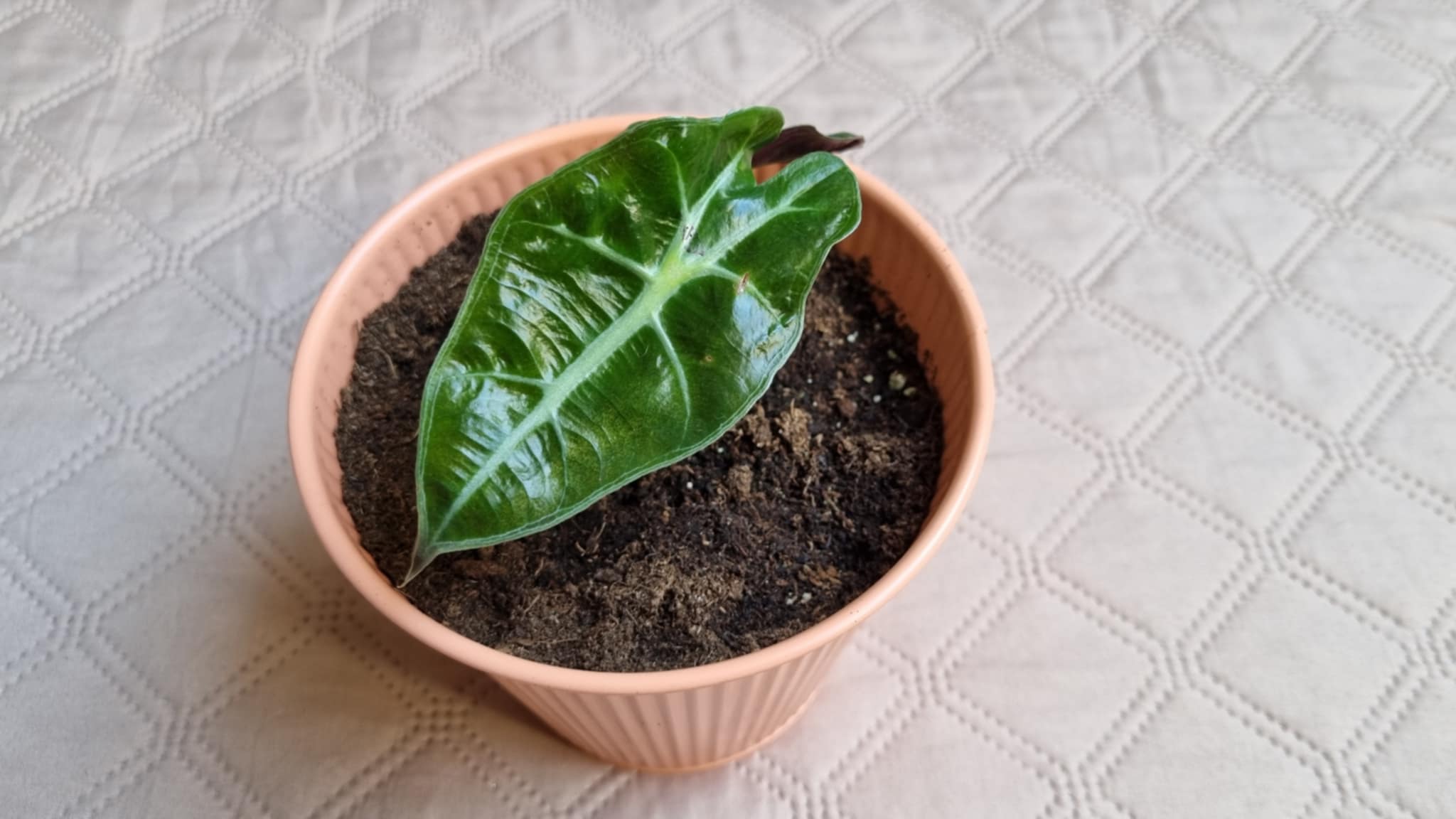
Care Guide for Alocasia longiloba Miq
Care Guide for Alocasia longiloba Miq
1. Light
- Ideal Light: Bright, indirect light. Alocasia longiloba thrives best in bright but filtered sunlight.
- Avoid Direct Sunlight: Direct sunlight can burn the leaves, so make sure the plant is not placed where it gets harsh afternoon sun.
2. Watering
- Watering Frequency: Keep the soil moist but not waterlogged. Water when the top inch of soil feels dry.
- Watering Tip: During the growing season (spring and summer), you may need to water more frequently. In winter, when growth slows, reduce watering to prevent root rot.
- Water Quality: It's best to use distilled or non-chlorinated water.
3. Humidity
- Humidity Level: High humidity is essential for Alocasia longiloba. Aim for humidity around 60% or higher.
-
How to Increase Humidity:
- Mist the plant regularly.
- Place the plant on a humidity tray (a shallow tray with water and pebbles).
- Alternatively, use a humidifier in the room.
4. Temperature
- Ideal Temperature: Alocasia longiloba prefers temperatures between 18-27°C (65-80°F).
- Avoid Cold Drafts: Protect the plant from cold drafts or temperatures below 10°C (50°F).
5. Soil
- Soil Type: Well-draining, rich, and slightly acidic to neutral soil (pH 5.5-7). A mix of potting soil, perlite, and orchid bark works well.
- Potting Tip: Ensure the pot has drainage holes to prevent water from collecting at the bottom.
6. Fertilization
- Fertilizer Type: Use a balanced liquid fertilizer or slow-release fertilizer during the growing season (spring and summer).
- Fertilizing Frequency: Fertilize every 4-6 weeks during the growing season. Reduce fertilization in fall and winter when the plant is dormant.
7. Repotting
- Frequency: Repot every 1-2 years to refresh the soil and give the plant more room to grow. Best done in spring or early summer.
- Repotting Tip: Choose a pot that's 1-2 inches larger in diameter than the current pot.
8. Pruning
- Regular Maintenance: Remove yellow or damaged leaves to promote healthy growth. Use clean, sharp scissors or pruning shears.
- Trimming: If the plant becomes too long or overgrown, you can trim it back to maintain its shape.
9. Pests and Diseases
- Common Pests: Watch for spider mites, aphids, scale insects, and mealybugs. Regularly inspect the leaves and stems of the plant.
- Treatment: If pests are found, wipe the leaves with a damp cloth or use insecticidal soap. Always treat pests quickly to prevent damage.
10. Winter Care
- Reduce Watering: Since the plant is dormant in winter, reduce watering and stop fertilizing.
- Avoid Stress: Keep the plant at a consistent temperature and ensure it gets enough indirect light during shorter days.
11. Propagation
- Method: Alocasia longiloba can be propagated by dividing the rhizomes. When repotting, you can carefully divide the roots and plant each division in a separate pot.
- After-Care: Keep the new plants in a warm, humid environment until they are well-rooted.
By following this care guide, your Alocasia longiloba Miq should thrive and reward you with its beautiful, striking leaves.
Comments